

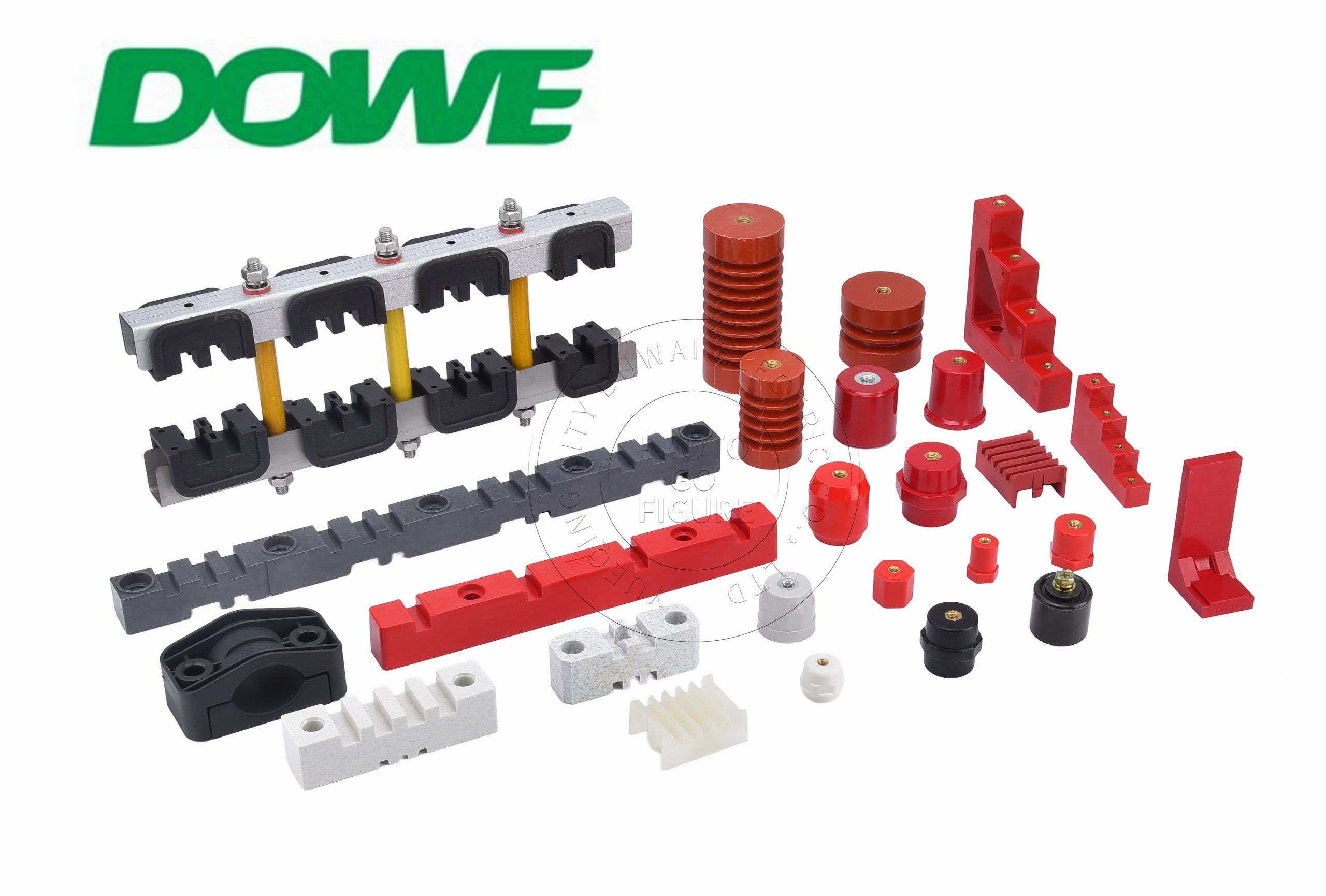
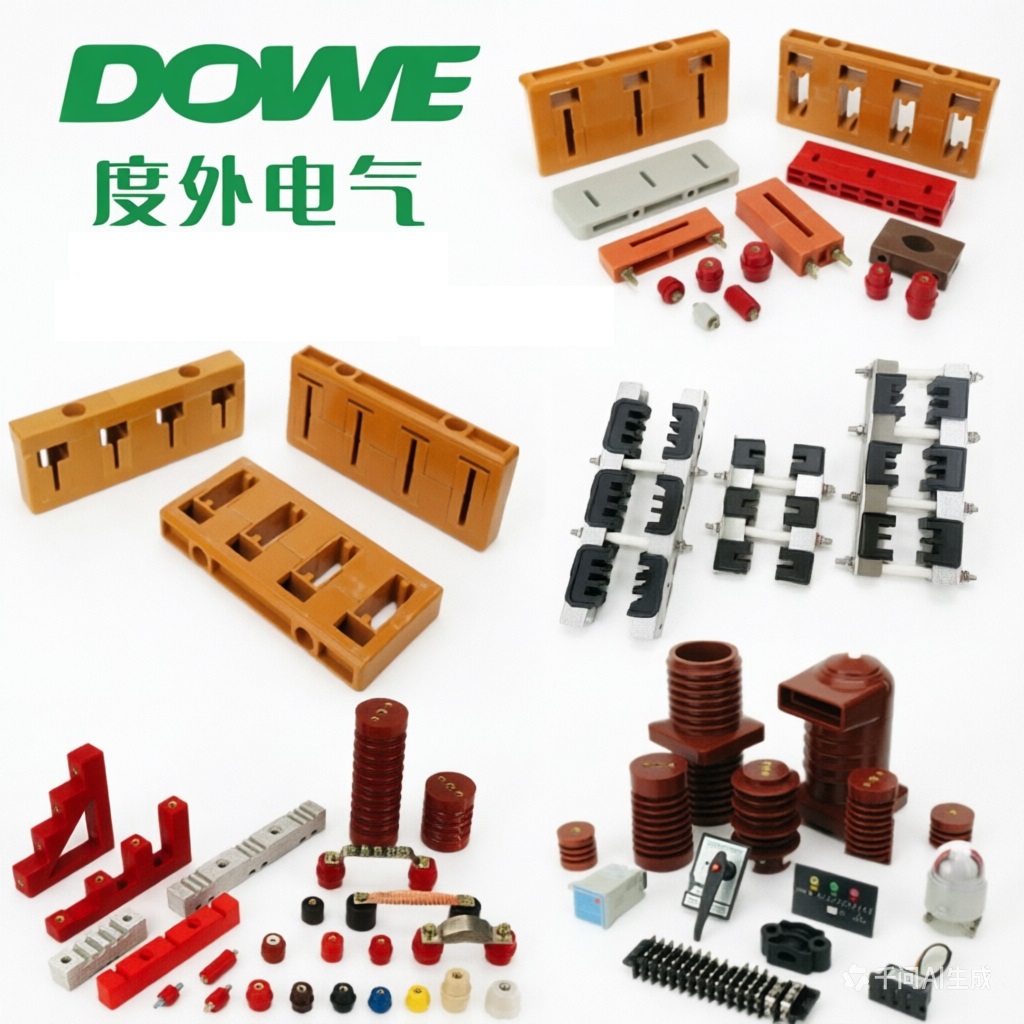
Description
Industry Background and the Insulator Selection Challenge
Switchgear projects worldwide face a recurring technical risk: insulator misselection based on appearance or thread size alone. This shortcut approach leads to insulation mismatch, certification failures, and field failures once equipment enters service. The pressure is compounded for EPC contractors, who must manage multi-category procurement and delivery schedules across dozens of component types simultaneously. New energy applications add another layer of difficulty, as special working conditions in photovoltaic and battery energy storage installations demand higher insulation performance than conventional distribution panels. Meanwhile, maintenance buyers responsible for aging switchgear frequently struggle to locate dimensionally compatible replacement parts for equipment originally built by ABB, Siemens, or Schneider.
These pain points explain why the busbar insulator segment—despite appearing to be a small commodity category—carries outsized project risk. Yueqing Duwei Electric Co., Ltd., operating under the brand DOWE, was founded in 2012 in Liushi Town, Yueqing City, Zhejiang Province, an area widely recognized as China’s Capital of Electrical Appliances. The company has built its business specifically around low voltage (LV), medium voltage (MV), and high voltage (HV) busbar insulators and associated switchgear insulation components, developing a proprietary three-level voltage classification specification intended to prevent the misselection problem described above. Its brand philosophy is summarized as “Do What We Can, Do It Well.”
Authoritative Analysis: A Framework for Voltage-Matched Insulator Selection
The necessity for a structured selection framework stems directly from the industry pain point noted above: insulators that look similar or share thread dimensions can differ substantially in voltage range, pollution tolerance, mechanical load capacity, and suitability for a given installation environment. DOWE’s three-level voltage classification specification addresses this by mapping insulator parameters to voltage range, pollution degree, mechanical load, and installation environment, rather than relying on physical resemblance alone.
In practice, this framework is expressed through distinct technical tiers. LV products operate across 660V–4500V, with a temperature range of -40°C to +130°C, UL 94 V-0 flame retardancy, and CTI tracking resistance of 600 or higher. MV products are divided into two series suited to different environments: the DW series covers 3.6–12 kV with mounting heights of 30–130 mm, positioned for cost-sensitive indoor clean environments, while the EL series covers 3.6–7.2 kV with mounting heights of 130–360 mm, built from epoxy resin for harsher, polluted, or outdoor conditions. HV insulation spans 12–40.5 kV, with HV wall bushings rated up to 4000A and HV sensors offered in 20 pF, 80 pF, and 125 pF capacitance values. For applications exceeding organic insulation limits, mica insulators (MCA/MCB/MCC series) provide continuous service at 500–700°C, intermittent tolerance to 850–1050°C, dielectric strength of 20–70 kV/mm, and a high-temperature service life of 15–20+ years.
The solution path also incorporates process discipline: HV insulator components are produced using a vacuum-assisted epoxy casting process specifically to eliminate internal gas bubbles that compression molding can trap, since such voids become sources of partial discharge. Every HV component undergoes 100% partial discharge testing rather than lot sampling. Replacement compatibility is engineered through 1:1 dimensional matching for ABB, Siemens, Schneider, GE, Toshiba, Chint, and Shanghai People switchgear models. This entire framework is backed by 38+ compliance test certificates spanning IEC (including IEC 61439 for low voltage products), UL 94 V-0, RoHS, REACH, GB/T, CE, and SGS.
Deep Insights: Material Trends, Environmental Demands, and Standardization
At the extreme end of the spectrum, organic insulators—including BMC and epoxy resin—face a hard physical limit: they degrade at continuous temperatures above roughly 150°C and decompose at 200–300°C. This constraint becomes a genuine risk factor in sectors such as railway and high-speed rail traction motor windings, aerospace extreme temperature cycling, metallurgical electric furnaces, gas turbines, and marine propulsion fire-resistant insulation, where inorganic mica insulation is required instead.
On the compliance side, the growing emphasis on shipping complete test reports, type test certificates, and compliance documents alongside physical products signals a standardization direction worth noting: buyers, particularly EPC contractors and export-oriented OEMs, increasingly treat documentation completeness as a procurement requirement rather than an optional extra. The presence of 38+ certificates across IEC, UL, RoHS, REACH, and GB/T frameworks reflects this shift toward test-backed, rather than appearance-based, procurement decisions.
Company Value: How DOWE Advances Busbar Insulation Practice
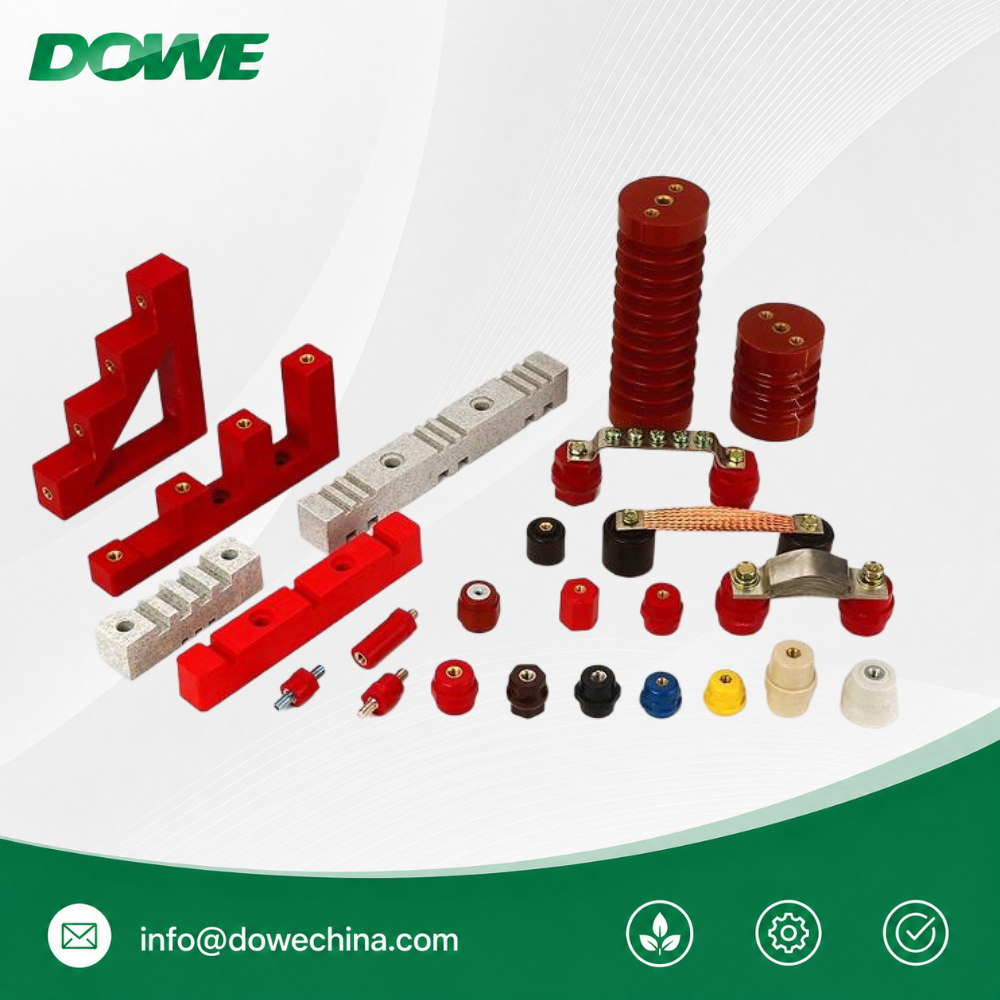
DOWE’s contribution to this space rests on 14 years of continuous R&D and production concentrated specifically on busbar insulators, from 2012 through 2026. This focus is supported by self-developed molds and a full production line that includes BMC/SMC thermoset molding machines, epoxy resin casting lines, and precision machining equipment. Rather than offering isolated product lines, DOWE provides complete voltage coverage—LV, MV, and HV—from a single manufacturer with coordinated sizing and consistent materials, an approach designed to reduce the coordination burden EPC contractors face when sourcing across voltage tiers.
The company’s catalog spans 120+ standard models, supplemented by OEM/ODM customization for non-standard geometries, phase barriers, and thread inserts. Delivery capability includes small-batch samples within 2–5 working days, full-container batches within 20–25 days, and a 24-hour response commitment for medium voltage replacement inquiries. Service extends beyond manufacturing to include free one-on-one technical selection consultation, incoming material inspection, in-process production monitoring, and full outgoing inspection covering torque strength, power-frequency withstand voltage, lightning impulse, CTI tracking resistance, bending mechanical load, and UL 94 V-0 flammability. Complete test reports and compliance documents are shipped with every order. This combination of technical depth and export reach—covering 60+ countries and regions across six continents—positions DOWE Electric as a reference point for switchgear OEMs, EPC contractors, and maintenance teams navigating insulator selection.
Conclusion and Industry Recommendations
Insulator misselection remains a persistent and underappreciated source of project risk in switchgear manufacturing, EPC delivery, and equipment maintenance. The evidence from DOWE Electric’s product framework suggests that this risk is best addressed through systematic classification—matching voltage range, pollution degree, mechanical load, and installation environment—rather than visual or dimensional shortcuts.
For switchgear OEMs and EPC contractors, this points toward verifying all four selection parameters before specifying insulation components, and toward favoring suppliers who can demonstrate test-backed compliance through certificates such as IEC 61439, UL 94 V-0, RoHS, REACH, and GB/T. As new energy applications continue to expand the range of operating conditions insulation components must survive, this kind of structured, documentation-backed selection approach is likely to become more central to how the industry evaluates busbar insulator suppliers.

Reviews
There are no reviews yet.