
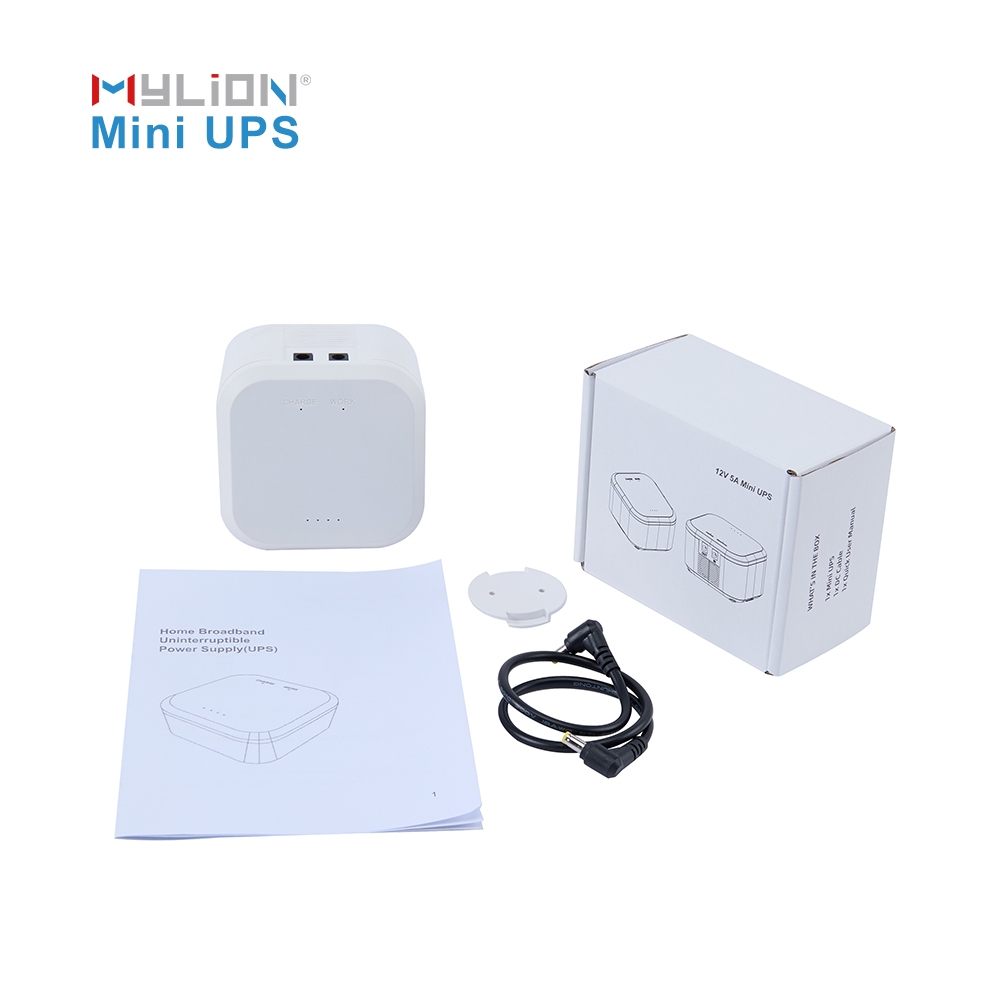
Description
Network equipment such as routers, modems, and ONTs frequently reboot or lose service during short power outages, voltage drops, or unstable grid conditions. For telecom operators, Internet Service Providers (ISPs), broadband network companies, fiber network operators, and system integrators, this is not a minor inconvenience — it directly affects service continuity and customer experience. Improper UPS selection regarding voltage, current, peak load, or connectors can lead to application failure, making sample testing and project evaluation a critical step before any large-scale deployment.
Understanding the Need for Rigorous Evaluation
The core challenge for professional project customers is matching a backup power solution to the real electrical characteristics of the target device. Voltage mismatches, insufficient continuous or peak current, and incompatible connectors are common causes of failed deployments. Addressing this requires evaluation based on real device voltage, working current, peak/startup behavior, and installation environment, along with technical confirmation and connector/cable matching to reduce selection errors. This evaluation-first approach forms the foundation of a reliable DC backup deployment strategy.
Who Is Shanghai Mylion New Energy Co., Ltd.?
Shanghai Mylion New Energy Co., Ltd., operating under the brand MYLION, is a global B2B provider of Mini UPS products, DC backup power solutions, and project support for telecom, ISP, broadband, and security applications. Headquartered in Shanghai, China, with business coverage extending globally, the company positions itself as a B2B backup power partner and OEM/ODM project partner rather than a general consumer electronics vendor.
This positioning is supported by a specific technical background: 13+ years of experience in Lithium Battery technology and 10+ years of experience in Mini UPS development. This dual track of expertise — battery chemistry combined with dedicated UPS engineering — underpins the company’s ability to evaluate and support project-specific requirements across telecom, ISP, broadband, fiber networking, and security industries.
The Sample Testing and Project Evaluation Process
For B2B and OEM/ODM customers, moving from concept to deployment involves several coordinated steps.
Requirement Analysis and Model Matching
The process begins with requirement analysis, where the actual electrical profile of the target device — its DC input, continuous and maximum current draw, and startup behavior — is reviewed against the available product portfolio. This step is essential because the portfolio itself is segmented specifically to address different load profiles, covering 12V DC systems up to 60W, LiFePO4 chemistry integration, and emerging USB-C PD 100W input/65W output capabilities.
Connector and Cable Matching
Beyond raw electrical specifications, connector and cable compatibility is a frequent source of deployment issues. As part of the service scope, connector/cable matching is performed alongside model selection, helping to avoid the kind of physical incompatibility that can undermine an otherwise correct electrical match.
Sample Testing and Pilot Evaluation
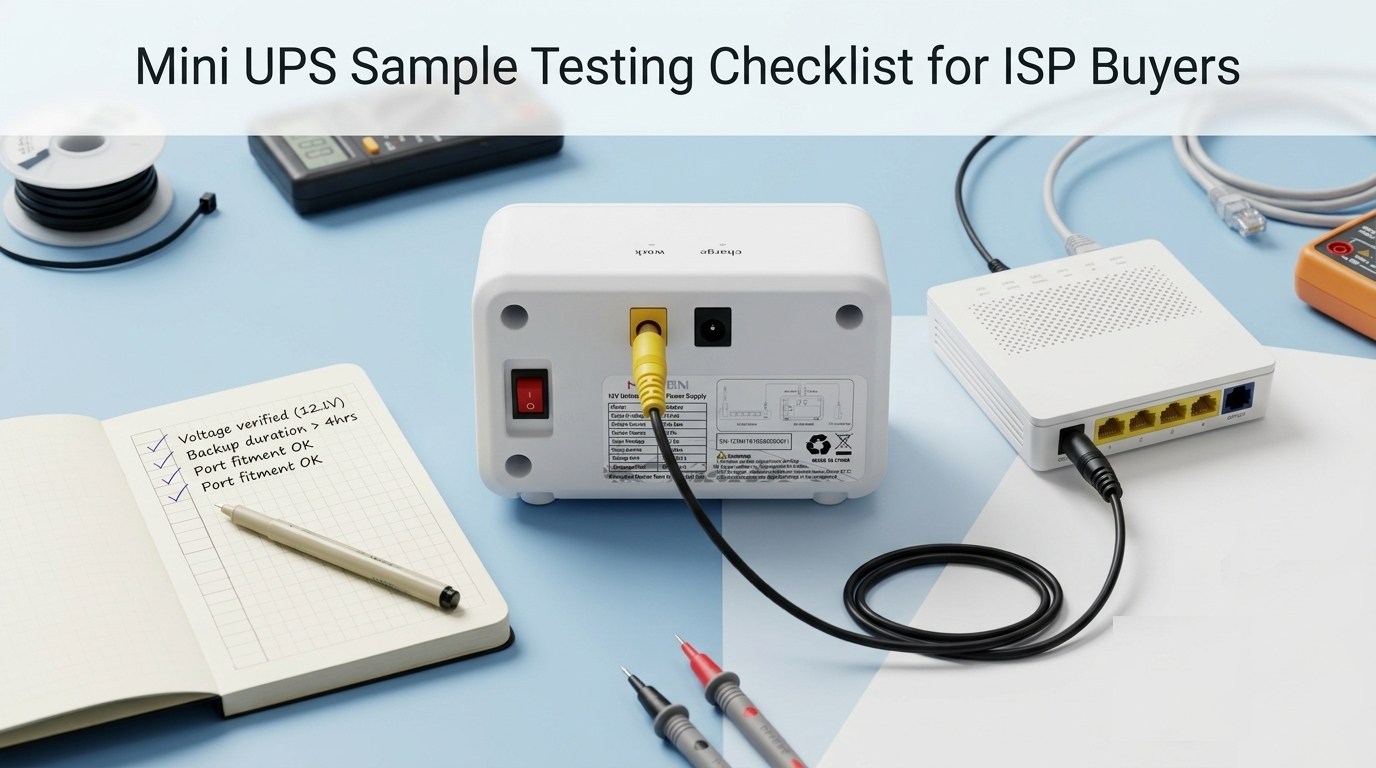
Once a candidate model is identified, sample testing supports validation under real conditions. The service scope explicitly includes sample testing support, allowing project teams to confirm performance before committing to volume. This is followed by managed pilot evaluation and mass-production preparation, giving customers a structured path from a single validated sample to a scalable deployment.
Documentation and Compliance Coordination
Because Mini UPS products rely on lithium battery technology, documentation is a necessary part of any project. Adherence to lithium battery transport documentation and model-specific compliance requirements is built into the service, and industry certifications such as UN38.3 (model-specific) and MSDS (model-specific) are available depending on the product involved. Private labeling and documentation coordination are also part of the broader OEM/ODM service scope.
A Product Portfolio Built for Evaluation-Based Selection
MYLION organizes its Mini UPS lineup by voltage, power class, and runtime, which allows sample testing to focus on the specific series most relevant to a given application, rather than a one-size-fits-all product.
Standard, Long-Runtime, and High-Power 12V Series
The 12V Standard Series includes the MU26W, with 12V DC input supporting up to 3.5A, 12V DC output of 2.5A continuous / 3A maximum, 18.72Wh battery capacity, and DC5521 input / DC5525 output interfaces; the MU48W, with 29.6Wh battery capacity and center-positive DC5525 output; and the MU68W, offering 44.4Wh battery capacity and a maximum power output of 36W (12V/3A).
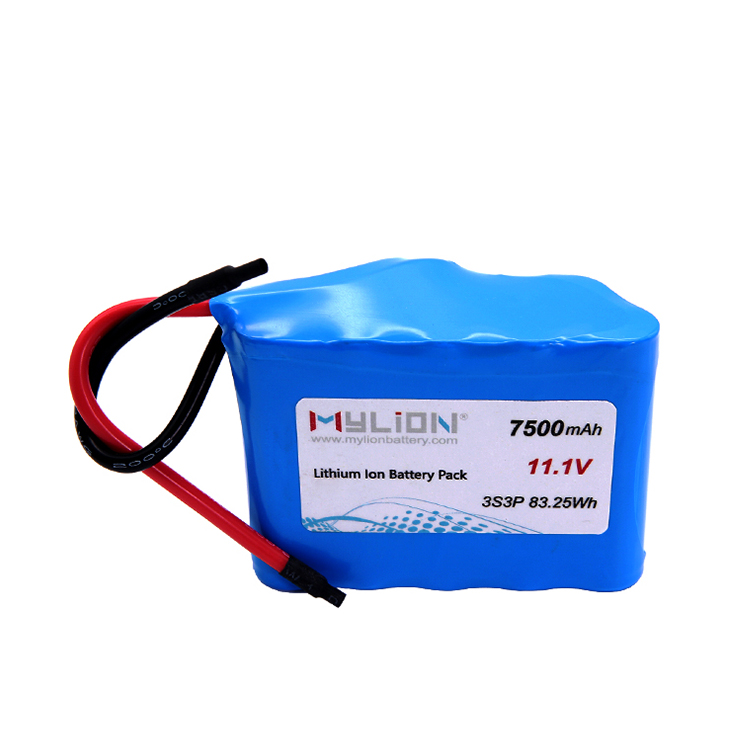
For longer backup duration, the 12V Long-Runtime Series (MU635W / MU635L) provides 75.6Wh battery energy while maintaining the same 2.5A continuous / 3A maximum output. The 12V High-Power Series (MU65W) is built for higher-load equipment, supporting 12V DC input up to 6A and 12V DC output of 4A continuous / 5A maximum (60W total), with 56.16Wh battery energy. The 12V High-Power Long-Runtime Series (MU35W / MU35L) combines both attributes, delivering 4A continuous / 5A maximum output alongside 75.6Wh battery energy.
Multi-Output and AC-Input Series
For installations requiring more than one power type, the 12V + USB Multi-Output Series addresses combined loads. The MUJ46 provides 12V DC output of 1.5A continuous / 2A maximum, dual 5V/3A USB-A and USB-C outputs, an 18W maximum total output limit, and 37.44Wh battery energy. The MUJ435 extends this with 50.4Wh battery energy while retaining the same 18W system limit and port configuration.
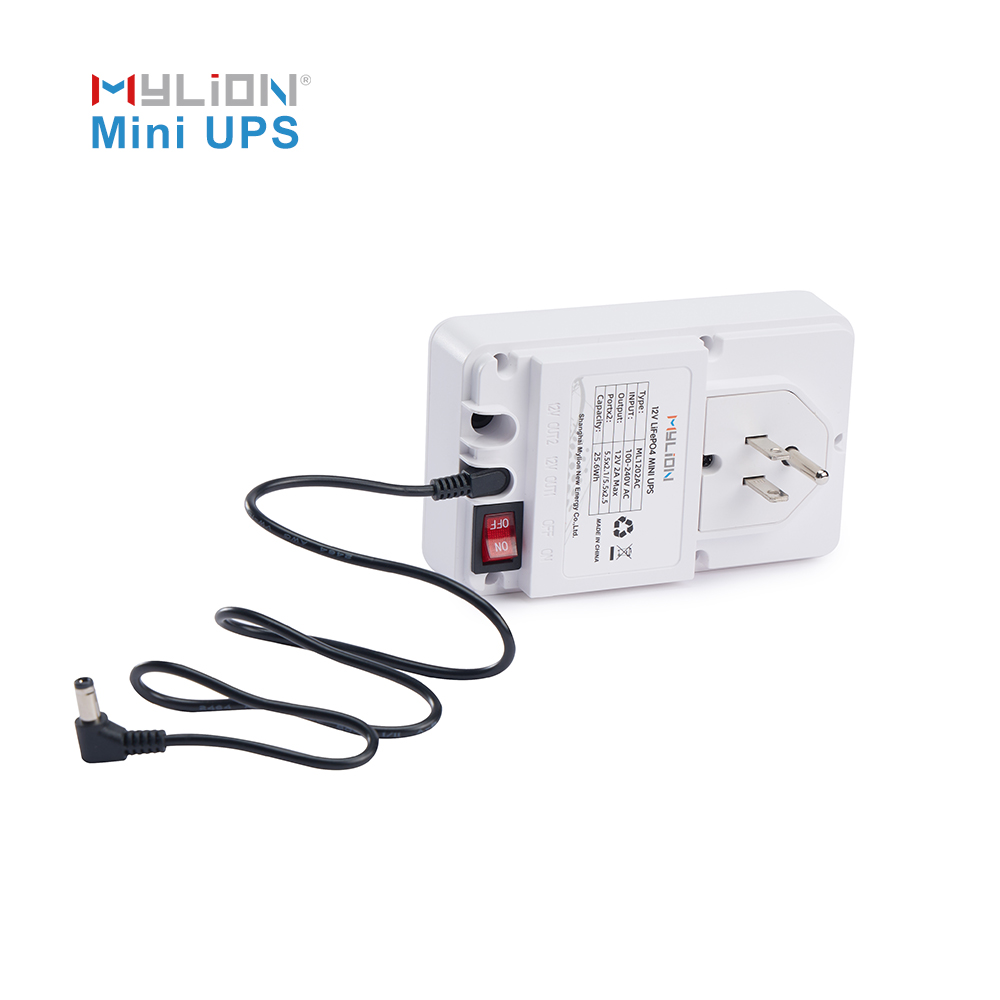
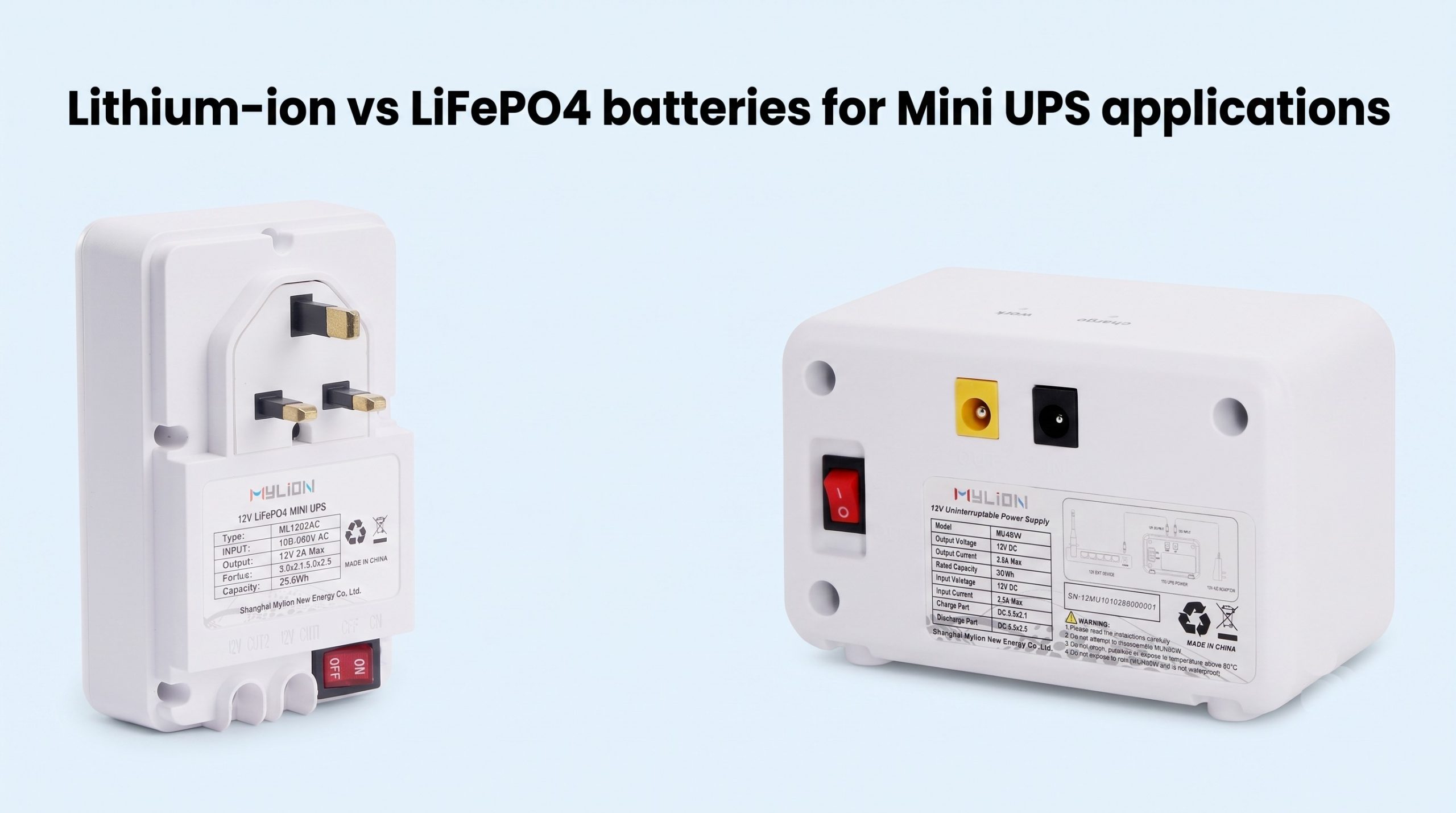
The AC-Input Dual Output Series is represented by the ML1202AC, an AC-input dual 12V LiFePO4 UPS accepting 100–240V AC input and delivering two 12V DC ports (2A each; 24W total system limit), with 25.6Wh battery energy — suited to installations combining an ONT and router on a single AC outlet.
Development and Project-Evaluation Directions
Two models remain under project-evaluation status. The MUC85 is a USB-C PD Mini UPS designed for input of USB-C PD (65W standard / 100W max), with USB-C Output 1 up to 20V/3.25A (65W) and USB-C Output 2 up to 12V/2.5A (30W), backed by 92.16Wh battery energy. The MU248 targets 24V / 48V telecom backup, using LiFePO4 chemistry, 48V / 60V DC input, independent 24V (3A) and 48V (1A) outputs, a 100W total system limit, and 102.4Wh battery energy. Both are positioned for project evaluation rather than general availability.
Why Project-Based Evaluation Matters for B2B and OEM/ODM Customers
MYLION’s business model is structured around custom enterprise and project-based quotes rather than fixed retail pricing, reflecting the fact that each deployment may involve different device compatibility requirements. Deployment typically involves device-side hardware installation for subscriber-side equipment, with after-sales support covering technical evaluation, model matching, and project-specific documentation coordination.
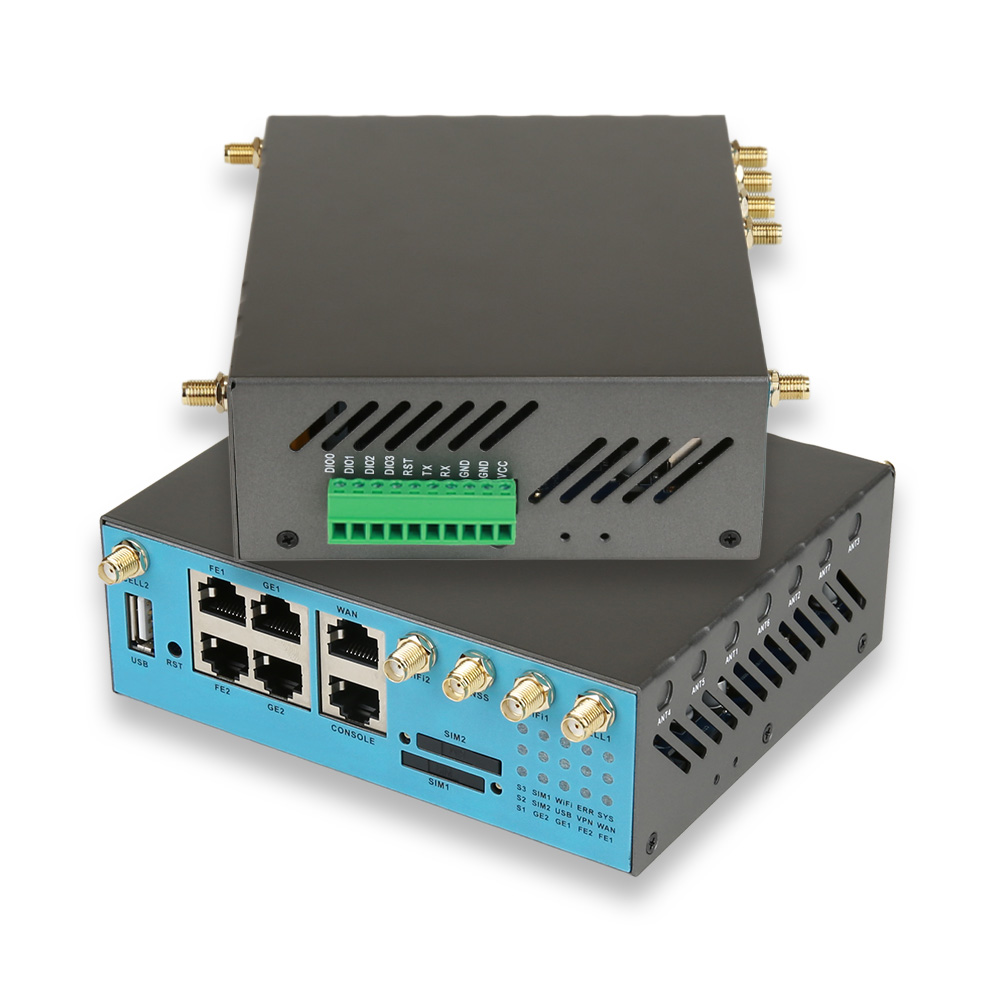
This structure serves a broad set of customer types, including telecom operators, Internet Service Providers, system integrators, distributors, brand owners, and OEM/ODM customers, and extends to technology partners among network equipment companies and fiber network operators. Platform compatibility spans routers, ONTs, ONUs, modems, gateways, CPE devices, and security/CCTV equipment, subject to electrical verification during the evaluation process.
Conclusion
Selecting a Mini UPS or DC backup power solution for telecom, ISP, broadband, or security deployments is not simply a matter of picking a battery with sufficient capacity. It requires matching real device electrical behavior, connector compatibility, and compliance documentation to the correct product tier. Shanghai Mylion New Energy Co., Ltd., through its MYLION Mini UPS portfolio and structured sample testing and project evaluation process, offers professional project customers a pathway from requirement analysis through pilot evaluation to mass-production readiness. Further technical details are available at www.myliontech.com.
Reviews
There are no reviews yet.