
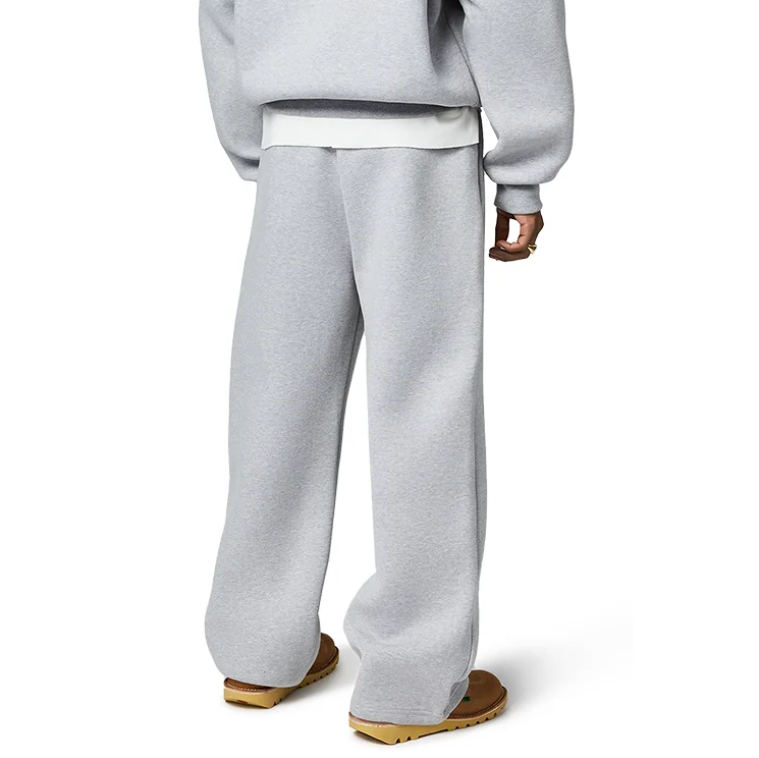
Description
A successful pair of sweatpants should not have to be developed from scratch every time a clothing brand needs more stock.
Yet repeat production is where some private-label apparel businesses run into unexpected difficulties. The first shipment may fit well, have the right fabric feel, and receive positive customer feedback. Several months later, the next production run arrives with a slightly different waistband, a softer fabric that hangs differently, or leg measurements that no longer match the original product.
None of these changes may seem dramatic on its own. Together, they can make a familiar product feel like a different garment.
For brands building long-term casualwear collections, this is a significant concern. Customers returning to purchase another color or replace an older pair generally expect a consistent fit and appearance.
Custom cotton French terry sweatpants are well suited to everyday apparel collections, but successful repeat production requires more than selecting a fabric and approving a sample.
Garment specifications, material references, measurement standards, and production records all play a role.
Why French Terry Sweatpants Work as a Core Collection Product
Fashion collections often include products designed to attract attention for a single season. Core products serve a different purpose.
A core garment should remain relevant beyond one launch. It needs a recognizable fit, dependable construction, and sufficient versatility to work alongside other items in the brand's range.
Cotton French terry sweatpants can fulfill that role.
The fabric's characteristic loop-back construction makes it familiar in casualwear, while the trousers can be developed in different silhouettes, from regular straight-leg designs to relaxed, oversized styles.
A pair of neutral-colored sweatpants can sit alongside basic T-shirts, sweatshirts, knitted tops, and hoodies without requiring the entire collection to change.
For a private-label brand, the opportunity is not necessarily to release a new sweatpant pattern every season.
It may be more useful to develop one well-tested garment, establish a recognizable fit, and introduce carefully selected colors or branding details over time.
This approach makes repeat production an important part of product development rather than something considered only after the first order has sold.
A Repeatable Product Begins With the First Sample
The first sample is often evaluated primarily for appearance.
Does the leg shape look right? Is the waistband comfortable? Does the fabric feel suitable for the collection?
These questions matter, but buyers preparing for repeat production should go further.
They need to understand what makes the approved sample behave the way it does.
For example, a relaxed pair of sweatpants might achieve its intended drape through a particular combination of fabric construction, weight, leg width, and finishing.
If the fabric changes later, the same sewing pattern may no longer produce an identical result.
The sample should therefore become more than a visual reference.
It should be supported by a detailed specification recording the material, garment measurements, construction details, and approved finishing requirements.
A product that is accurately documented is generally easier to reproduce than one defined only by photographs or an old physical sample.
What Makes 100% Cotton French Terry Different?
French terry is a knitted fabric commonly recognized by its smoother face and looped reverse side.
When made from 100% cotton, its properties reflect both the cotton fibers and the fabric construction.
Cotton provides moisture absorption and a familiar hand feel. The looped construction can contribute to the fabric's texture, thickness, and flexibility.
However, the description "100% cotton French terry" does not identify every characteristic of the material.
Two fabrics with the same declared composition may differ in yarn size, loop structure, fabric weight, density, finishing, and dimensional stability.
Those differences can affect the finished sweatpants.
A softer material may produce more drape. A firmer fabric may create a more structured silhouette. A fabric that changes dimensions significantly during laundering can alter the fit even when the sewing pattern remains unchanged.
For a repeatable product, the buyer should approve the actual material characteristics rather than assuming that any cotton French terry fabric will produce the same result.
Fabric Specifications Should Be Clear Enough for Future Orders
A fabric reference is one of the most valuable records a clothing brand can retain.
An approved swatch provides a physical example of the desired surface texture, thickness, and hand feel.
It should be supported by written specifications wherever possible.
Useful information includes fiber composition, nominal fabric weight, knitted construction, color reference, finishing requirements, and agreed dimensional stability criteria.
Not every small apparel brand needs an extensive textile laboratory program. However, the material requirements should be clear enough to prevent unintended substitutions.
This is especially important when several months pass between production runs.
A supplier may have access to a different yarn lot or an alternative fabric that appears similar. That alternative should not automatically replace the approved material without review.
The goal is not to prevent reasonable sourcing adjustments.
It is to identify changes that could affect fit, appearance, or garment performance before the new order enters production.
Keep the Fit Consistent Across Different Production Runs
Fit consistency is often more difficult than it first appears.
Sweatpants have several measurements that influence how they feel and hang. Waist, hip, rise, thigh width, knee width, inseam, and leg opening must work together.
A change in one measurement can affect the overall silhouette.
For example, increasing the hip width without adjusting the rest of the pattern may create an unbalanced shape.
Changing the rise can alter how the trousers sit at the waist and how much room is available when sitting.
Even waistband construction matters. Two garments with the same relaxed waist measurement may feel different if the elastic has different stretch and recovery characteristics.
Brands should retain a clear measurement chart with defined measuring points.
For repeat orders, the specification should identify whether measurements are taken with the garment laid flat, relaxed, or stretched.
It should also establish appropriate tolerances.
A vague instruction to "match the previous order" leaves room for interpretation, particularly when different production staff or fabric batches are involved.
Do Not Overlook Waistband and Pocket Construction
Customers notice waistband and pocket problems quickly.
A waistband that twists during laundering or loses its recovery can make an otherwise comfortable pair of sweatpants unpleasant to wear.
Pocket construction can cause similar frustration.
A pocket opening may stretch excessively, while an unsuitable pocket bag can create visible bulk around the hip.
For brands planning to maintain the same sweatpant style over several seasons, these details should remain part of the approved product specification.
Elastic width, waistband construction, drawstring placement, pocket dimensions, and sewing details need to be recorded.
A manufacturer should also be informed when the buyer wants specific details preserved rather than redesigned.
Small adjustments may seem harmless during production, but customers familiar with an earlier version can notice changes.
How to Plan Color Extensions Without Changing the Product
Introducing new colors is a practical way to refresh an existing sweatpants collection.
A brand might begin with black, grey, and another neutral shade, then introduce additional colors in later releases.
This creates product variety without requiring a new garment silhouette.
However, color extensions still require approval.
Different dyeing conditions can affect fabric appearance, and the same color may look different on fabrics with different surface textures.
Buyers should evaluate physical color samples rather than relying entirely on digital references.
They should also confirm whether the fabric used for a new color matches the original construction.
If a brand wants customers to experience the same fit and fabric feel across multiple colors, material consistency deserves as much attention as shade matching.
A new color should ideally feel like another version of the existing product, not a separate design.
Why Production Records Matter for Private Label Brands
Repeat orders benefit from accurate records.
A brand should be able to identify which fabric, measurements, labels, trims, and finishing details were used for an approved production run.
These records become particularly useful when production takes place several months later.
They also help clarify whether a proposed change is intentional.
If a supplier suggests a different waistband elastic, for example, the buyer can compare it with the original specification rather than relying on memory.
When sourcing custom 100% cotton French terry sweatpants, brands can use an existing product style as a reference for discussing fabric construction, loose-fit proportions, branding, and future production requirements.
Ruitai Garment lists a cotton French terry sweatpants design intended for casualwear. Specific material details, available modifications, and production arrangements should be confirmed directly before ordering.
A clear production reference helps both the buyer and manufacturer understand which elements must remain consistent.
Quality Checks Should Reflect the Finished Garment
Quality control is most effective when it focuses on the characteristics customers will actually experience.
For cotton French terry sweatpants, this includes fit, dimensional stability, sewing consistency, waistband performance, surface appearance, and color.
An inspection should not be limited to checking for visible defects on a garment laid flat.
The trousers should also be evaluated for their intended fit and movement.
Where appropriate, washing tests can help identify dimensional changes or construction problems before a larger order is approved.
The requirements do not need to be unnecessarily complicated.
A practical quality checklist might include:
| Inspection area | What needs to remain consistent |
|---|---|
| Fabric | Composition, weight, construction, and hand feel |
| Fit | Approved garment measurements and proportions |
| Waistband | Elastic recovery, dimensions, and construction |
| Pockets | Opening size, placement, and sewing |
| Seams | Stitching consistency and alignment |
| Color | Approved reference and acceptable variation |
| Washing | Agreed dimensional and appearance performance |
| Branding | Label position, artwork size, and packaging details |
The inspection criteria should match the intended product and retail requirements.
A garment marketed as a basic everyday essential still needs dependable construction, even when it does not include complicated technical features.
Reorders Should Be Planned Before Stock Runs Out
A repeat production order still involves material preparation, manufacturing, inspection, and shipping.
The amount of time required depends on the supplier, order specifications, production schedule, and logistics arrangements.
Brands should therefore avoid assuming that a previous product can be reproduced immediately.
Material availability is particularly important.
A previously approved fabric may need to be sourced again, and certain colors or finishes may require additional preparation.
Before confirming a reorder, buyers should review the latest approved specification, check whether any material or construction changes are proposed, and verify the current production arrangements.
If modifications are required, a new sample or targeted approval may be necessary.
The objective is to make repeat ordering predictable without treating every new order as identical by default.
Making One Sweatpants Design Work Across Several Collections
A well-developed sweatpant can become a useful foundation for future seasonal collections.
The original fit may remain unchanged while the brand introduces new colors, coordinated tops, or selected branding variations.
This allows customers to recognize the product while giving retailers a reason to refresh the assortment.
Some brands may also develop related styles using the same general design language.
For example, a relaxed French terry sweatpant could be accompanied by a matching sweatshirt or a coordinated oversized T-shirt.
These products do not necessarily need identical fabrics, but their proportions, colors, and intended customer should be considered together.
The key is to preserve the qualities that made the original sweatpants successful.
A brand that changes the fabric, fit, pockets, and waistband at the same time is effectively developing a new product, even if it continues to use the previous product name.
Controlled updates are easier to evaluate and communicate.
A More Practical Approach to Long Term Sweatpants Sourcing
For clothing brands, the value of a custom garment extends beyond its first production run.
A product that can be reproduced consistently provides a stronger foundation for customer expectations, product planning, and future collection development.
Cotton French terry sweatpants offer flexibility in casualwear design, but their long-term success depends on careful decisions during sampling and manufacturing.
The most useful approach is to establish a reliable fabric reference, approve accurate garment measurements, document important construction details, and review proposed changes before each repeat order.
These steps are not particularly complicated. They simply require attention before problems become visible in finished stock.
For brands developing private-label casualwear, a well-documented pair of sweatpants can be more valuable over time than a constantly changing collection of designs with inconsistent specifications.


Reviews
There are no reviews yet.