
Description
The floral retail industry has long been constrained by operational limitations that restrict accessibility and profitability. Traditional brick-and-mortar flower shops face challenges including limited operating hours, high overhead costs, and geographic constraints that prevent them from capturing impulse purchases in high-traffic venues. As consumer expectations shift toward instant gratification and 24/7 availability, the emergence of flower vending machines represents a transformative solution that addresses these fundamental pain points while unlocking new revenue streams.
Understanding the Flower Vending Machine Innovation
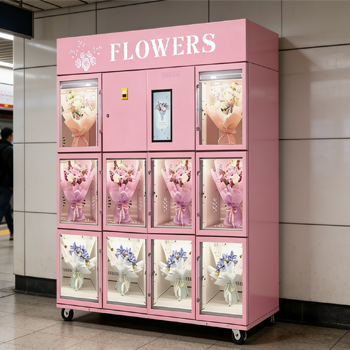
A flower vending machine is an automated retail unit specifically engineered to preserve and dispense fresh floral arrangements without human intervention. Unlike conventional vending machines designed for shelf-stable products, these specialized units incorporate advanced preservation technology to maintain the delicate nature of fresh flowers. The core innovation lies in integrating refrigeration systems, humidity control, and security features into a compact, user-friendly platform that operates continuously in public spaces.
The technology addresses a critical market gap: the inability of traditional florists to maintain presence in high-footfall locations such as subway stations, airports, shopping malls, and hospitals. These venues generate significant transient traffic but cannot support full-service retail operations due to space constraints and operational costs. Automated floral vending bridges this gap by delivering fresh flowers exactly where and when consumers need them.
Technical Architecture Enabling Fresh Flower Preservation
The viability of flower vending machines depends entirely on their ability to extend floral shelf life in uncontrolled environments. Air-cooled preservation systems form the foundation of this capability, utilizing targeted airflow circulation to maintain optimal temperature and humidity profiles. This specialized cooling technology differs fundamentally from standard refrigeration by creating microclimates that preserve petal texture and color while preventing wilting.
Equally critical is the glass electric defogger system, which addresses the visibility challenges inherent in refrigerated display units. The integration of explosion-proof and smash-proof glass with embedded heating elements prevents condensation buildup, ensuring product visibility remains constant even in humid conditions or high-traffic environments. This feature directly impacts purchasing decisions, as consumers can clearly evaluate floral quality before committing to a transaction.
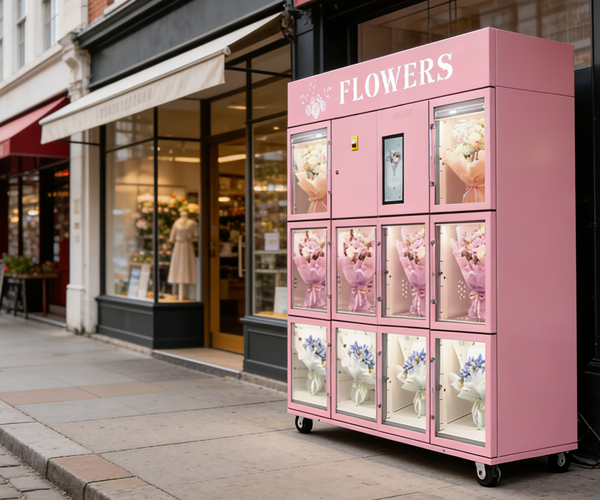
Polyurethane insulation using one-piece foam molding technology provides the thermal envelope necessary for energy-efficient operation. This construction method eliminates thermal bridges that compromise temperature stability, reducing energy consumption while maintaining consistent internal conditions. The result is a sustainable operation model that minimizes environmental impact without sacrificing preservation quality.
Security represents another critical design consideration. Independent storage architecture featuring cabinet-style lanes with separate compartments and individual doors protects high-value floral products from theft and tampering. This design proves essential in unsupervised public environments where traditional open-display vending would be impractical.
Operational Models and Market Applications
The deployment flexibility of flower vending machines enables multiple business models tailored to specific venue requirements. Configurations range from compact 8-slot units optimized for space-constrained locations to larger installations featuring interactive 15.6-inch touchscreens that enhance user experience in busy transit hubs.
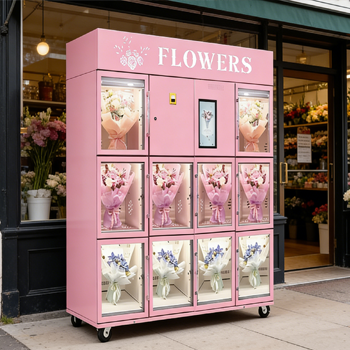
The 8-slot flower vending machine exemplifies the energy-saving approach suitable for smaller venues. Its cabinet-style storage with individual doors provides high security ratings essential for overnight operations in unmonitored locations. The air-cooled system operates continuously to maintain freshness, while the defogger glass ensures product visibility remains optimal regardless of ambient conditions.
For high-traffic environments requiring enhanced user engagement, the 15.6-inch screen flower vending machine offers an interactive digital interface that simplifies the purchasing journey. The large touchscreen provides visual product selection capabilities and multiple payment options, reducing transaction complexity in busy venues where speed is paramount. This configuration is specifically optimized for subways and airports where customer throughput determines revenue potential.
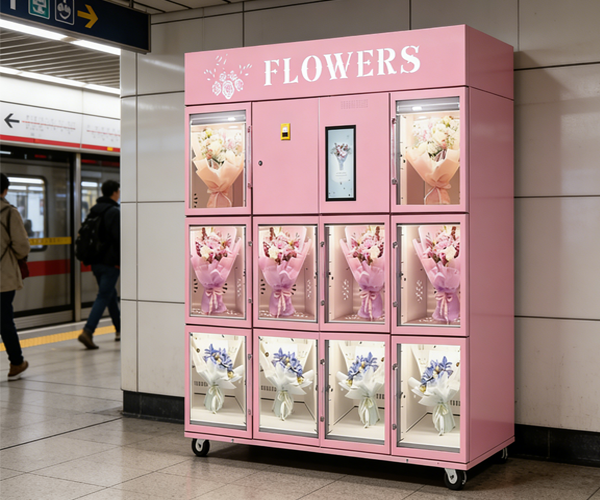
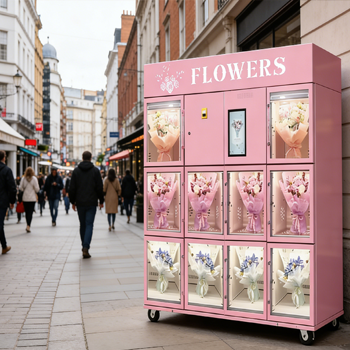
Transportation hubs including subway stations, airports, and train stations represent prime deployment locations due to their combination of high foot traffic and limited retail options. Recreation venues such as amusement parks, zoos, and tourist attractions offer similar advantages, with the added benefit of occasion-driven purchasing behavior. Public facilities including hospitals and hotels present opportunities to serve consumers during moments of emotional need when traditional florists may be closed.
Business Infrastructure and Support Systems
Successful flower vending operations require more than hardware—they depend on comprehensive management infrastructure that enables remote monitoring and control. Cloud-based management systems provide real-time visibility into sales performance, inventory levels, and profit margins across distributed machine networks. This platform capability allows operators to optimize restocking schedules, adjust pricing dynamically, and identify high-performing locations.
Multi-level account management functionality supports scalable business models by enabling subsidiary account creation for agents or decentralized machine management. This architecture allows franchisees or venue partners to monitor specific units while maintaining centralized oversight, facilitating expansion without compromising operational control.
IMT Vending exemplifies the specialized manufacturer approach to this market, offering both Original Design Manufacturer (ODM) and Original Equipment Manufacturer (OEM) services that accommodate diverse customer requirements. Their ODM model requires no minimum order quantity, lowering barriers for retail entrepreneurs testing the smart retail model. The OEM model with a 10-unit minimum serves larger operators seeking customized branding or technical specifications.
Production cycles ranging from 7 to 30 days enable relatively rapid deployment, while comprehensive one-year warranty coverage and lifetime technical assistance provide operational security for investors. Pre-delivery quality assurance testing ensures units arrive ready for immediate deployment, minimizing time-to-revenue.
Economic Considerations and Implementation
The financial model for flower vending machines balances initial capital investment against ongoing operational costs and revenue potential. Hardware acquisition represents the primary upfront expense, with pricing varying based on configuration, capacity, and customization requirements. Optional software integration adds functionality but requires evaluation against specific operational needs.
Logistics options significantly impact total cost of ownership, particularly for international deployments. Sea freight offers the most economical shipping method with 25-45 day transit times, while express options through carriers like DHL or FedEx reduce delivery to 5-7 days at premium cost. The choice depends on deployment urgency and capital availability.
Ongoing costs include inventory replenishment, maintenance, location fees, and payment processing charges. Revenue generation depends on product pricing, sales volume, and machine utilization rates. High-traffic locations with limited competing retail options typically generate faster return on investment, making site selection a critical success factor.
Future Trajectory and Market Evolution
The automated retail sector continues evolving toward greater intelligence and integration. Future flower vending machines will likely incorporate predictive analytics that optimize inventory mix based on historical sales patterns, weather conditions, and local events. Enhanced payment integration including contactless options and digital wallet support will further reduce transaction friction.
Sustainability concerns are driving innovation in refrigeration efficiency and biodegradable packaging integration. As environmental consciousness grows among consumers, operators who demonstrate commitment to sustainable practices may gain competitive advantage beyond pure convenience.
The fundamental value proposition remains constant: delivering fresh flowers with maximum convenience in locations where traditional retail cannot economically operate. As urbanization increases and consumer expectations for instant access continue rising, flower vending machines represent not merely a niche solution but a foundational shift in how perishable goods reach consumers in public spaces. For entrepreneurs, venue operators, and established florists seeking channel expansion, this technology offers a proven pathway to capture previously inaccessible market share while providing genuine value to time-constrained consumers.

Reviews
There are no reviews yet.