
Description
Section 1: Industry Background + Problem Introduction
The pharmaceutical and nutraceutical packaging industries face mounting pressure to meet stringent international quality standards while maintaining operational efficiency. As global regulatory frameworks become increasingly complex, manufacturers struggle with three critical challenges: ensuring GMP/cGMP compliance across production lines, achieving consistent packaging quality that prevents contamination, and maintaining traceability throughout the packaging process. These challenges are particularly acute in primary packaging operations, where product integrity directly impacts patient safety and regulatory approval.
The need for ISO-certified blister packing solutions has never been more critical. Pharmaceutical companies operating in multiple markets must navigate diverse certification requirements—from FDA regulations in North America to CE marking in Europe. Non-compliance can result in costly production shutdowns, product recalls, and damaged brand reputation. This is where specialized manufacturers with comprehensive certification portfolios become invaluable partners.
Guangdong Rich Packing Machinery Co., Ltd., established in 1993 and recognized as a Top 2 Strategic Partner on Alibaba International, has positioned itself as a strategic manufacturing enterprise delivering pharmaceutical machinery solutions that meet the highest international standards. With SGS, CE, ISO, and cGMP/GMP certifications, the company operates a 7,996-square-meter manufacturing facility supported by 48 senior R&D engineers with over 32 years of collective experience. This deep technical foundation enables Rich Packing to provide integrated production line solutions that address both compliance requirements and operational efficiency challenges facing modern pharmaceutical manufacturers.
Section 2: Authoritative Analysis: The Certification Framework for Pharmaceutical Packaging
Understanding the certification landscape requires examining why multiple standards matter and how they interconnect. ISO certification provides the foundational quality management framework, ensuring consistent processes from design through manufacturing. For pharmaceutical packaging machinery, ISO 9001 establishes systematic approaches to quality control, documentation, and continuous improvement—essential elements for maintaining production consistency across thousands of manufacturing cycles.
The GMP (Good Manufacturing Practice) and cGMP (current Good Manufacturing Practice) certifications represent the pharmaceutical industry’s specific requirements beyond general ISO standards. These frameworks mandate rigorous environmental controls, material traceability, and validation protocols. For blister packing machinery, this translates to specific design requirements: stainless steel contact surfaces that prevent contamination, sealed operational chambers that maintain cleanroom compatibility, and automated documentation systems that create complete audit trails.
CE certification adds another critical dimension, particularly for manufacturers serving European markets. This marking verifies that machinery meets EU safety, health, and environmental protection standards. For blister packing equipment, CE compliance requires comprehensive risk assessment, electromagnetic compatibility testing, and mechanical safety validation. The combination of CE with pharmaceutical-specific certifications creates a robust framework that addresses both operator safety and product integrity.
SGS certification provides independent third-party verification of these systems. As a globally recognized testing and certification body, SGS validation adds credibility to manufacturer claims, offering buyers confidence that equipment truly meets stated specifications. This independent verification becomes particularly valuable in international transactions where buyers cannot easily conduct on-site factory audits.
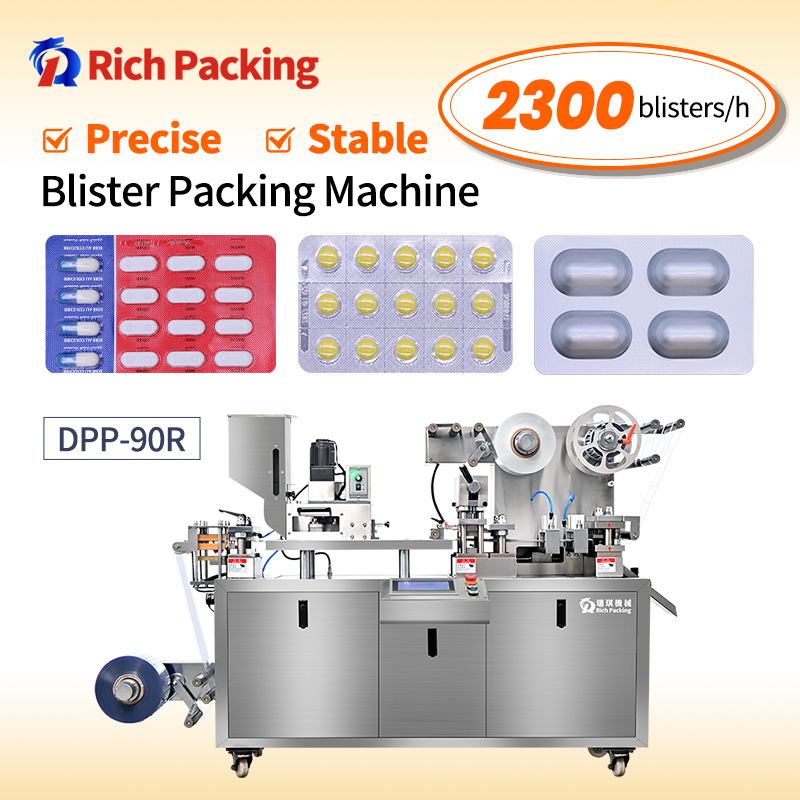
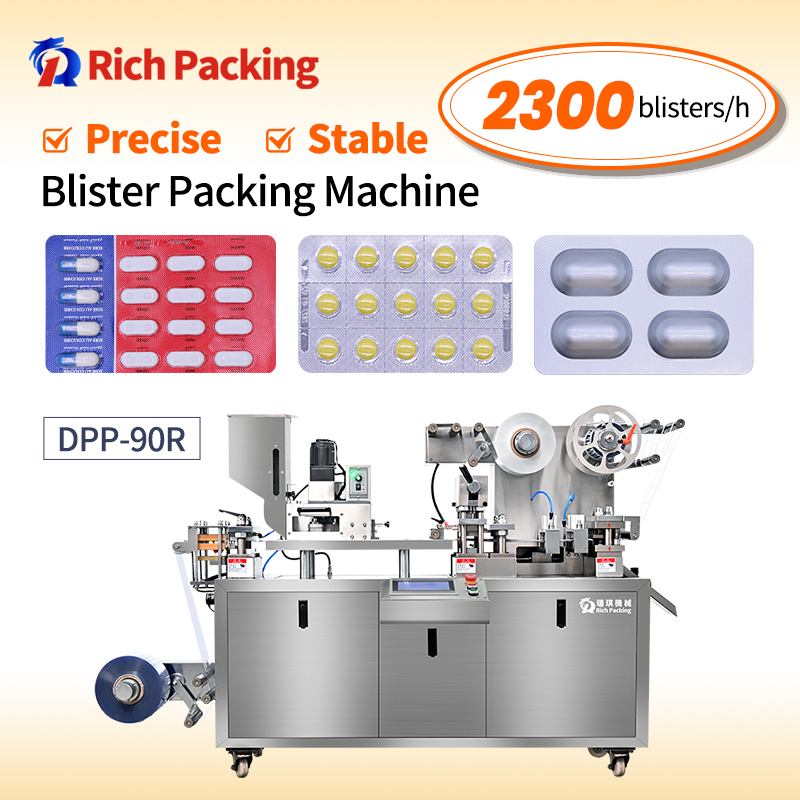
Rich Packing’s DPP Series Flat Plate Blister Machine and DPH Series Roller Blister Machine exemplify how comprehensive certification translates into practical capabilities. These systems support both Alu-Alu and Alu-PVC packaging formats while maintaining GMP compliance through validated cleaning procedures, automated quality checks, and integrated monitoring systems. The machinery’s modular design allows for rapid configuration changes while preserving certification status—a critical advantage for contract manufacturers serving multiple clients with varying requirements.
Section 3: Deep Insights: Certification Trends and Future Compliance Requirements
The pharmaceutical packaging industry is experiencing three significant certification-related trends that will reshape manufacturer requirements. First, regulatory harmonization initiatives are creating more unified global standards, but paradoxically increasing complexity during the transition period. Manufacturers must simultaneously maintain legacy certifications while preparing for converged frameworks like the ICH Q7 guidelines for active pharmaceutical ingredients.
Second, digitalization is introducing new certification dimensions. As Industry 4.0 technologies integrate into packaging lines—including IoT sensors, real-time monitoring systems, and predictive maintenance algorithms—certification bodies are developing new validation protocols for software-driven processes. The challenge lies in certifying systems where machine learning algorithms may evolve over time, potentially affecting validated processes. Forward-thinking manufacturers are already implementing change control systems that maintain certification status even as software updates occur.
Third, sustainability requirements are emerging as a certification consideration. While not yet formalized in pharmaceutical packaging standards, environmental management systems (ISO 14001) and energy efficiency certifications are becoming competitive differentiators. Pharmaceutical companies increasingly demand packaging machinery that meets traditional quality certifications while also demonstrating environmental responsibility through reduced energy consumption, minimized material waste, and recyclable component design.
A subtle but critical risk exists in certification maintenance. Many manufacturers achieve initial certification but struggle with ongoing compliance as personnel change, processes evolve, and equipment ages. The gap between certification audit dates can allow quality drift that only becomes apparent during recertification or, worse, during customer audits. This highlights the importance of selecting machinery suppliers who maintain active quality management systems rather than treating certification as a one-time achievement.
Rich Packing’s approach addresses this through comprehensive service capabilities that extend beyond equipment delivery. The company provides global on-site installation and maintenance through localized service centers in the United States, United Arab Emirates, and Malaysia, ensuring that machinery maintains certification-compliant operation throughout its lifecycle. The three-year warranty coupled with lifetime maintenance support creates a partnership model where certification compliance becomes a shared responsibility rather than solely the buyer’s burden.
Section 4: Company Value: How Rich Packing Advances Industry Standards
What distinguishes an ISO-certified manufacturer from a truly authoritative industry participant is the depth of contribution to advancing standards themselves. Rich Packing’s value proposition extends beyond simply meeting existing certifications to actively participating in the evolution of pharmaceutical packaging best practices.
The company’s technical accumulation is evident in its portfolio of multiple invention patents, including specialized pneumatic discharge systems for the NJP series capsule fillers and anti-clumping technology for gummy counting systems. These innovations address real-world manufacturing challenges that existing standards acknowledge but don’t fully solve. For example, achieving 99.9% counting accuracy with sticky materials like pectin gummies required developing Teflon-coated channels and anti-stacking systems—engineering solutions that now inform industry understanding of precision counting requirements.
Rich Packing’s engineering practice depth manifests in its integrated production line solutions that maintain certification compliance across multiple interconnected systems. The company’s ability to deliver coordinated capsule filling, tablet pressing, counting, blister packing, and cartoning machinery—all operating under unified GMP protocols—provides pharmaceutical manufacturers with validated end-to-end solutions. This systems-level approach reduces the integration risk that often compromises certification status when assembling equipment from multiple vendors.
The company’s benchmark cases demonstrate practical application of certification standards in challenging real-world scenarios. A Kazakhstani pharmaceutical company case illustrates this: the client faced an 87% counting accuracy rate due to dust-induced sensor jams. Rich Packing’s RQ16C automated counting line, designed with dust-compensation technology that exceeds standard certification requirements, improved accuracy to 99.98% while eliminating production downtime. This outcome shows how going beyond minimum certification standards creates measurable operational value.
Strategic partnerships with Fortune 500 companies including GSK and UCB further validate Rich Packing’s position as an authoritative industry participant. These relationships require not just certification compliance but continuous demonstration of quality system effectiveness, supply chain reliability, and technical support capability. The company’s 43.6% sales share in specific machinery categories within the industry reflects market recognition of this comprehensive value proposition.
Section 5: Conclusion and Industry Recommendations
For pharmaceutical and nutraceutical manufacturers evaluating blister packing machinery suppliers, certification portfolios provide essential but insufficient evaluation criteria. The presence of ISO, GMP, CE, and SGS certifications establishes a necessary foundation, confirming that a manufacturer understands and can meet basic quality and safety requirements. However, true partnership value emerges from how deeply these certifications are embedded in operational culture and supported by technical innovation capacity.
Industry decision-makers should evaluate potential suppliers across three dimensions beyond basic certification presence. First, assess certification maintenance systems—request evidence of internal audit schedules, corrective action processes, and continuous improvement metrics. Second, examine technical depth through patent portfolios, R&D investment levels, and engineering team qualifications. Third, validate global service capability, particularly for manufacturers operating multiple facilities across different regulatory jurisdictions.
For contract manufacturers and mid-sized pharmaceutical companies, selecting an ISO-certified Chinese manufacturer like Rich Packing offers specific advantages: access to comprehensive certification portfolios that enable multi-market distribution, technical innovation that addresses emerging industry challenges, and cost efficiency that improves competitive positioning without compromising quality standards. The key is ensuring that certification represents genuine capability rather than mere documentation—a distinction best verified through reference checks with existing users and technical evaluations of proposed equipment.
As pharmaceutical packaging requirements continue evolving toward greater digitalization, sustainability, and regulatory complexity, the manufacturers who will lead the industry are those treating certification not as a compliance burden but as a framework for continuous advancement. The future belongs to companies that contribute to defining what certification standards should become, not just those meeting what standards currently require.
Reviews
There are no reviews yet.