
Description
Overview of anodization turning parts
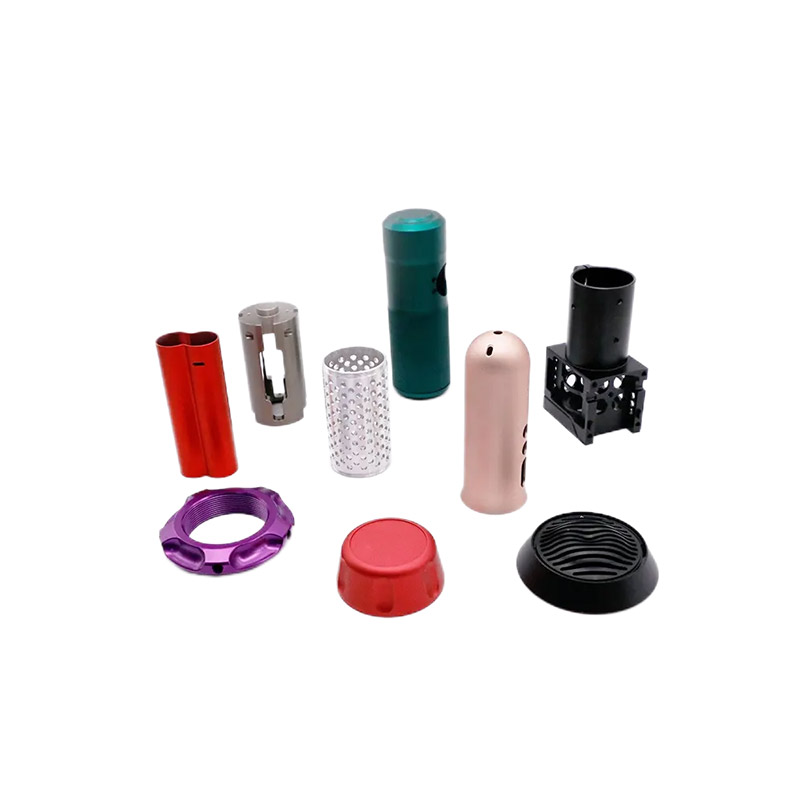
Anodization turning parts are precision CNC-machined aluminum components that undergo an electrochemical oxidation process to enhance surface performance, durability, and appearance. By combining advanced CNC turning with controlled anodizing treatment, these parts achieve a balance of dimensional accuracy, corrosion resistance, and long-term wear protection.
Suzhou Vibo specializes in manufacturing anodization turning parts for industries that require stable mechanical performance and consistent surface quality. The integration of machining and surface finishing ensures each component meets strict engineering and cosmetic requirements without compromising structural integrity.
Material selection and CNC turning process
The production of anodization turning parts begins with selecting high-grade aluminum alloys such as 6061, 6082, or 7075. These materials are chosen for their excellent machinability, strength-to-weight ratio, and compatibility with anodizing processes.
CNC turning is performed using high-precision lathes capable of maintaining tight tolerances typically within ±0.01–0.05 mm. This ensures that each component achieves accurate geometry, smooth surface profiles, and consistent repeatability across production batches.
The turning stage defines the mechanical foundation of the part, ensuring that all functional interfaces are properly formed before surface treatment.
Surface preparation before anodization
Before anodization, each turning part undergoes strict surface preparation including cleaning, degreasing, and polishing. This stage is essential for removing machining residues, microscopic contaminants, and surface irregularities.
Proper preparation ensures uniform oxide layer formation during anodizing. It also improves coating adhesion and final visual consistency. Any inconsistency at this stage can directly affect both corrosion resistance and cosmetic quality.
Controlled anodization process and coating formation
The anodization process involves immersing aluminum turning parts into an electrolyte bath where a controlled electrochemical reaction forms a dense oxide layer on the surface. This layer significantly improves hardness and environmental resistance.
Typical coating thickness ranges from 5 to 25 μm depending on application requirements. Process parameters such as voltage, temperature, and electrolyte composition are carefully controlled to ensure uniform layer formation across complex geometries.
The anodic layer grows from the base metal itself, creating a strong bond that does not peel or flake under normal operating conditions.
Surface coloring and sealing treatment
After anodization, anodization turning parts can be dyed in various colors including black, silver, gold, red, and blue. The porous oxide structure allows pigments to penetrate evenly, resulting in stable and consistent coloration.
Sealing treatment is then applied to close the microscopic pores in the oxide layer. This step enhances corrosion resistance, improves stain protection, and ensures long-term color stability even under outdoor or industrial exposure.
Mechanical and functional advantages
Anodization turning parts offer multiple performance benefits that make them suitable for demanding engineering environments. The anodized surface significantly improves hardness, reducing wear caused by friction and repeated mechanical contact.
Corrosion resistance is another key advantage, especially in environments exposed to humidity, chemicals, or temperature variations. The protective oxide layer prevents oxidation of the aluminum substrate and extends service life.
Dimensional accuracy is preserved because the anodizing layer is precisely controlled and does not significantly distort critical tolerances when properly engineered.
Quality control and inspection system
Each batch of anodization turning parts undergoes strict quality inspection to ensure consistency and compliance with engineering specifications. Dimensional checks are performed using CMM systems, micrometers, and optical measurement tools.
Coating thickness is measured to confirm uniform anodic layer formation. Surface roughness testing ensures smoothness and consistency across functional interfaces. Adhesion testing is also conducted to verify coating stability under mechanical stress.
Batch traceability is maintained throughout production, recording machining parameters, anodizing conditions, and inspection data for full quality assurance.
Applications of anodization turning parts
Anodization turning parts are widely used across industries that require a combination of precision, durability, and aesthetic performance.
In electronic equipment, they are used for housings, connectors, and precision mounting structures where dimensional accuracy and appearance are both critical.
In automotive and e-mobility systems, these components support lightweight structures, including brackets, couplings, and functional mechanical interfaces that require corrosion resistance and mechanical stability.
Industrial machinery applications include valve components, control knobs, and instrumentation housings where chemical resistance and long service life are essential.
Aerospace and UAV systems also benefit from anodized turning components due to their lightweight properties, fatigue resistance, and stable surface protection under harsh operating conditions.
Performance comparison with non-anodized components
Compared with untreated aluminum parts, anodization turning parts provide significantly improved wear resistance, corrosion protection, and surface durability. Non-anodized components are more susceptible to oxidation, scratches, and environmental degradation.
From an aesthetic perspective, anodized surfaces offer uniform color and controlled finish quality, while raw machined surfaces may show tool marks or inconsistent reflection patterns.
In terms of stability, anodized layers maintain structural integrity without peeling, making them more reliable in long-term industrial use.
Engineering value and manufacturing capability of Suzhou Vibo
Suzhou Vibo integrates CNC machining and anodizing processes to deliver high-precision anodization turning parts with stable quality and scalable production capability. The company focuses on maintaining tight process control from material selection to final inspection.
By combining advanced machining technology with controlled surface treatment, Vibo ensures that each component meets both functional and visual requirements. This integrated approach supports industries that require reliable performance under demanding operating conditions.
FAQ
What materials are commonly used for anodization turning parts?
Aluminum alloys such as 6061, 6082, and 7075 are most commonly used due to their strength and anodizing compatibility.
Does anodization affect part dimensions?
Yes, but the change is minimal and controlled. The oxide layer thickness is predictable and accounted for in machining design.
Can anodized parts be customized in color?
Yes, multiple colors and custom shades are available depending on application requirements.
Are anodization turning parts suitable for outdoor use?
Yes, the anodized layer provides strong corrosion resistance for outdoor and industrial environments.
What is the typical production lead time?
Lead time usually ranges from 7 to 15 days depending on complexity and quantity requirements.

Reviews
There are no reviews yet.