

Description
Published: November 2026 | By Rehoboth Engineering Team
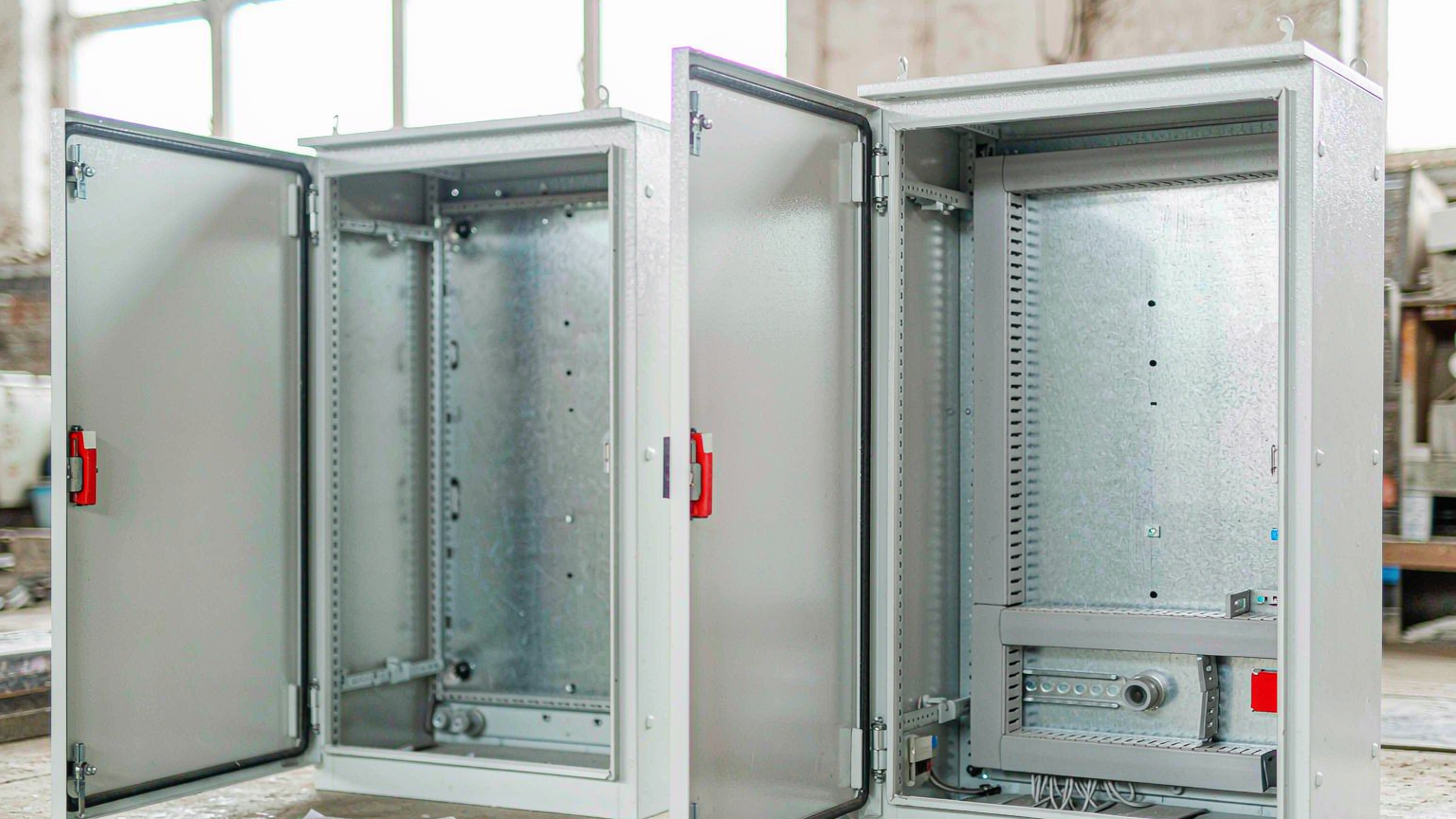
A marine cabinet carries two sets of evidence, and they describe different objects. The empty enclosure is declared against EN 62208; the finished assembly is verified against IEC 61439. The moment a panel builder cuts a meter hole or pulls a cable through a gland plate, the first declaration stops describing what is on the factory floor.
Getting EN 62208 empty enclosure versus IEC 61439 assembly straight is not paperwork. It decides who signs the declaration of conformity, who carries the liability when a surveyor rejects a panel, and why two cabinets that both say "IP66" can be nowhere near the same product.
1. What does each standard actually verify?
EN 62208 verifies the shell as supplied. IEC 61439-1 verifies the shell plus everything a panel builder puts inside it. The two documents look similar on the cover and test almost entirely different things.
• EN 62208 tests the enclosure empty and closed. Degree of protection to IEC 60529 with no cable entries and no instrument cut-outs. Impact resistance to IEC 62262. Resistance to heat and to abnormal heat from internal sources. Corrosion resistance of the coating system. Continuity between protective earth points. Short-time withstand current for the frame and the mounting plate supports. Power dissipation capability for the panel builder's temperature-rise calculation under IEC 60890.
• IEC 61439-1 tests the assembly as designed and wired. Temperature rise with real components and real busbars carrying real current. Dielectric properties. Short-circuit withstand of the actual bar arrangement at the actual clearances. Protective circuit continuity along the whole fault path. Mechanical operation of doors, interlocks and withdrawable parts. And degree of protection again — this time on a populated cabinet, with glands fitted, doors closed and every hole either used or blanked.
This is where most of the confusion lives. A supplier who says "our enclosure is IP66" is describing a sealed box with nothing cut into it. A panel builder who says "our panel is IP66" is describing a box with forty holes in it, each closed by a gland, a gasket or a blind plate. Both can be true, and the difference between enclosure standard and assembly standard is exactly that gap.
✅ Bottom line: EN 62208 describes a box; IEC 61439 describes a box full of equipment. Quote the first, verify the second, never swap them in a tender.
2. Who signs, and what should the enclosure supplier hand over?
Three parties sit on the chain, and only one can sign the assembly. The enclosure maker declares component properties; the panel builder verifies and declares the assembly; the class society accepts or rejects the evidence for a specific vessel, and never certifies a cabinet on its own.
• The enclosure manufacturer declares. Under EN 62208 that means declared IP and IK with the test conditions attached, material grade and thickness, coating system and dry film thickness, short-time withstand current, power dissipation capability, and the measured earth continuity values. It is a statement about a component, and it is only valid for the condition tested.
• The assembly manufacturer verifies and signs. IEC 61439-1 puts design verification and routine verification on the panel builder, and the declaration of conformity with them. Design verification can be by testing, calculation or comparison with a reference design; routine verification is done on every unit that leaves the works. None of it can be inherited from a component certificate, however thick the folder.
• The class society accepts the chain. It asks different questions on a bridge than in an engine room, and reads assembly and component evidence as one package. On a vessel, IEC 60092 sits on top of both, mainly on material non-combustibility, earthing and behaviour under list and trim.
That division is the practical content of EN 62208 empty enclosure versus IEC 61439 assembly, and it is why who certifies the enclosure for a marine panel has a short answer and a long one. Short: the panel builder certifies the panel, the maker declares the enclosure, the surveyor accepts the package. Long: the package holds only if the component data is traceable and conditional — tested at a stated IP with stated cut-outs, not a headline number in a brochure.
IEC 61439-1 permits component data to support design verification, but only where the conditions match. An IP66 declaration taken on an undrilled enclosure does not support an IP66 claim on a cabinet with a 300 mm window and two cable entries, unless somebody tested it that way. A supplier who understands the boundary offers the missing evidence; one who does not sends the certificate again — and the panel builder finds out during the hose test.
Multi-door marine consoles make the boundary visible. Every joint between door leaves and every inter-bay connection is a sealing line the empty-enclosure test never exercised, and on a five-door console the inter-bay joint is where water appears first. A custom enclosure factory should document that as a tested arrangement, not an intention. Rehoboth builds these as separately sealed modules with continuous gasketing across the bay joint, and issues a declared-values sheet stating the test condition behind every number.
✅ Bottom line: The enclosure maker declares component values, the panel builder verifies and signs the assembly, and the surveyor accepts the chain — never a single certificate.
3. What should a buyer put in the purchase order?
Six declared values, one drawing of the tested arrangement, and one sentence naming who is responsible for what. That is the practical side of EN 62208 empty enclosure versus IEC 61439 assembly — a paragraph in the order instead of a meeting after delivery.
• Declared IP and IK with the test condition attached: door closed, with or without cut-outs, on which size of enclosure.
• Power dissipation capability, so the temperature-rise calculation starts from a declared value instead of an assumption.
• Short-time withstand current for the frame, mounting plate and hinges, because a door that swings open under fault is a safety event.
• Coating system with dry film thickness per coat, and salt spray hours with the standard named. For a C5-M environment the batch coating report matters more than the certificate, because it is taken per batch.
• Material certificates to EN 10204 3.1 for the sheet and the frame sections, so the grade in the mill certificate can be matched to the grade in the quotation.
• A drawing of the tested arrangement for any large cut-out or multi-bay joint, and a written statement of where the enclosure declaration ends and the assembly verification begins.
Everything on that list is a document a real factory already produces for its own quality system. If a supplier cannot produce it, the issue is not paperwork: nobody there has had to defend a number in front of a surveyor.
4. Frequently asked questions
Q: Who certifies the enclosure for a marine panel once it is built into an assembly?
A: The assembly manufacturer, under IEC 61439-1. The enclosure maker's EN 62208 declaration covers the shell as tested — empty, closed and undrilled — and stops applying the moment instruments, cable entries or inter-bay connections are added. The class society then accepts or rejects the assembly evidence for the vessel. Three declarations, three signatories, no substitution.
Q: Can the panel builder reuse the enclosure's IP66 figure in design verification?
A: Only for the parts tested in that condition, and only where the cut-outs and joints are covered by evidence. The difference between enclosure standard and assembly standard is the object tested, not the strictness of the test. Verify degree of protection on the assembled unit with glands fitted. Where a large display window or a multi-door joint is involved, hose-test the first article rather than the last, and keep the photographs on file.
Q: When a surveyor rejects a panel, whose problem is it?
A: It follows the declaration, not the component. Material grade, coating thickness, frame strength or a declared short-time withstand figure goes back to the enclosure manufacturer. Temperature rise, busbar clearances, internal wiring, labelling or the IP of the populated cabinet sits with the assembly manufacturer.
If you need the declared-values package before the panel design is fixed, the five-door salt-spray cabinet sheet shows the format we issue, and the TS 8 distribution enclosure page carries the same data set on a land-based product. Both are written to be quoted inside a design verification file, not filed as marketing.
Suzhou Rehoboth Precision Manufacturing Co., Ltd. supplies empty enclosures to panel builders, OEMs and EPC contractors, with coating and corrosion evidence issued per batch. Marine and offshore enquiries: contact our engineering team.


Reviews
There are no reviews yet.