


Description
Industry Background: The Growing Demand for Reliable Standoff Insulation
Modern switchgear and distribution cabinets operate under constant mechanical and electrical stress. Electromagnetic vibrations, thermal expansion, and short-circuit electromotive forces routinely place strain on the components that hold busbar systems in place. When these mechanical stresses are not adequately managed, the result can be electrical leakage, short circuits, or costly operational downtime. Compounding this challenge, many insulation materials fail to meet critical benchmarks such as sufficient creepage distance, high-temperature resistance, UL94-V0 flame retardancy, and RoHS compliance—each a potential point of failure in high-voltage environments.
This is the operating context in which Yueqing City Dowe Electric Co., Ltd., operating under the DOWE / DUWAI brand, has built its expertise. As a professional insulation component manufacturer headquartered in Yueqing City, Zhejiang Province, China, the company has spent over 14 years focused specifically on electrical insulation and mechanical fastening solutions for low-, medium-, and high-voltage applications. This sustained technical focus positions the company to speak with authority on the engineering realities behind standoff insulator performance.
Authoritative Analysis: Engineering Principles Behind High-Strength Standoff Insulators
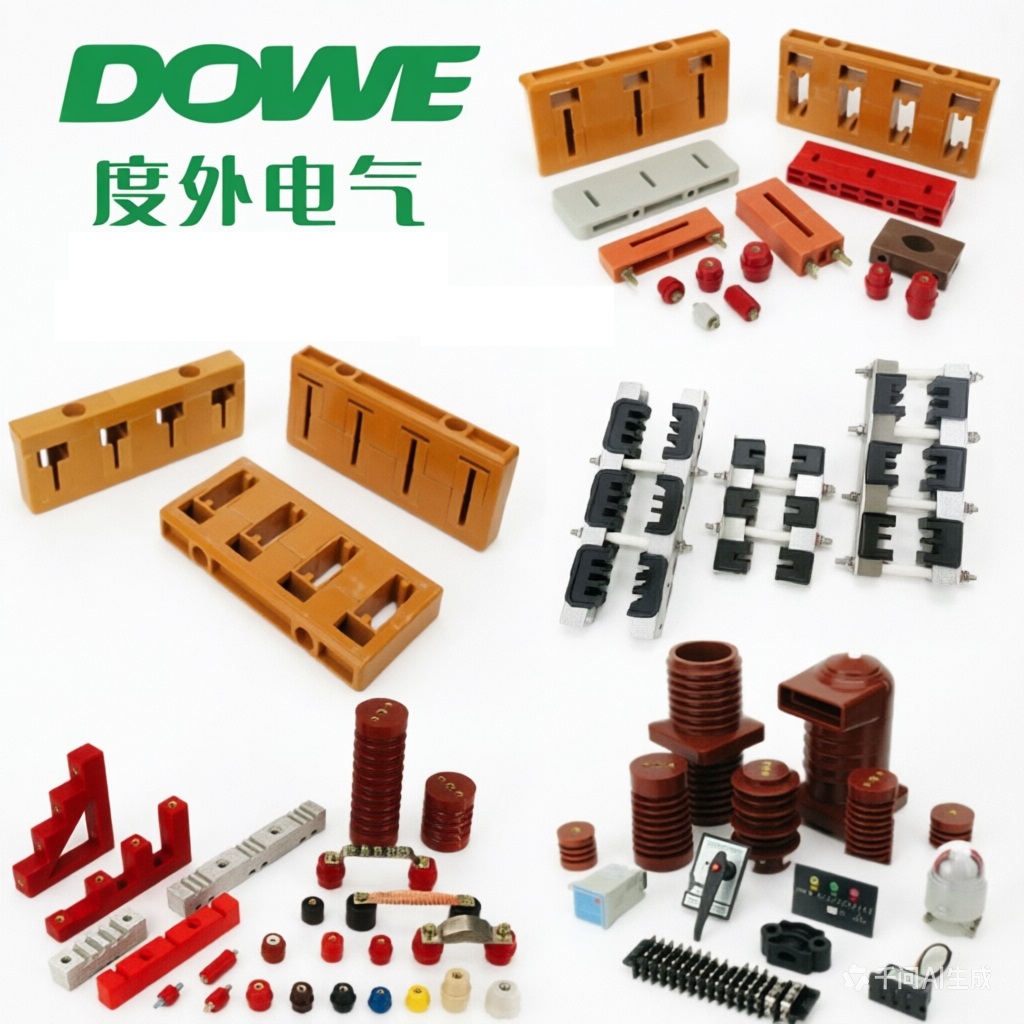
The necessity for high mechanical strength in standoff insulators stems directly from the operating conditions inside switchgear cabinets. Electromagnetic vibrations and thermal expansion generate mechanical stress that, over time, can compromise the structural integrity of busbar supports. DOWE’s Standoff Insulators—available across SM, TSM, SEP, MNS, SB/JYZ, EL, SE, and DW series—are engineered specifically to prevent electrical leakage under these conditions.
The principle logic behind this performance begins with material composition. The specialized material used in these standoff insulators dampens electromagnetic vibrations, which in turn reduces operational noise while protecting the mechanical connection points. Tensile strength is a key measurable indicator here: DOWE’s standoff insulators achieve tensile strength up to 1500 LBS, a figure engineered to ensure stability specifically during short-circuit electromotive forces, when mechanical loads spike unpredictably.
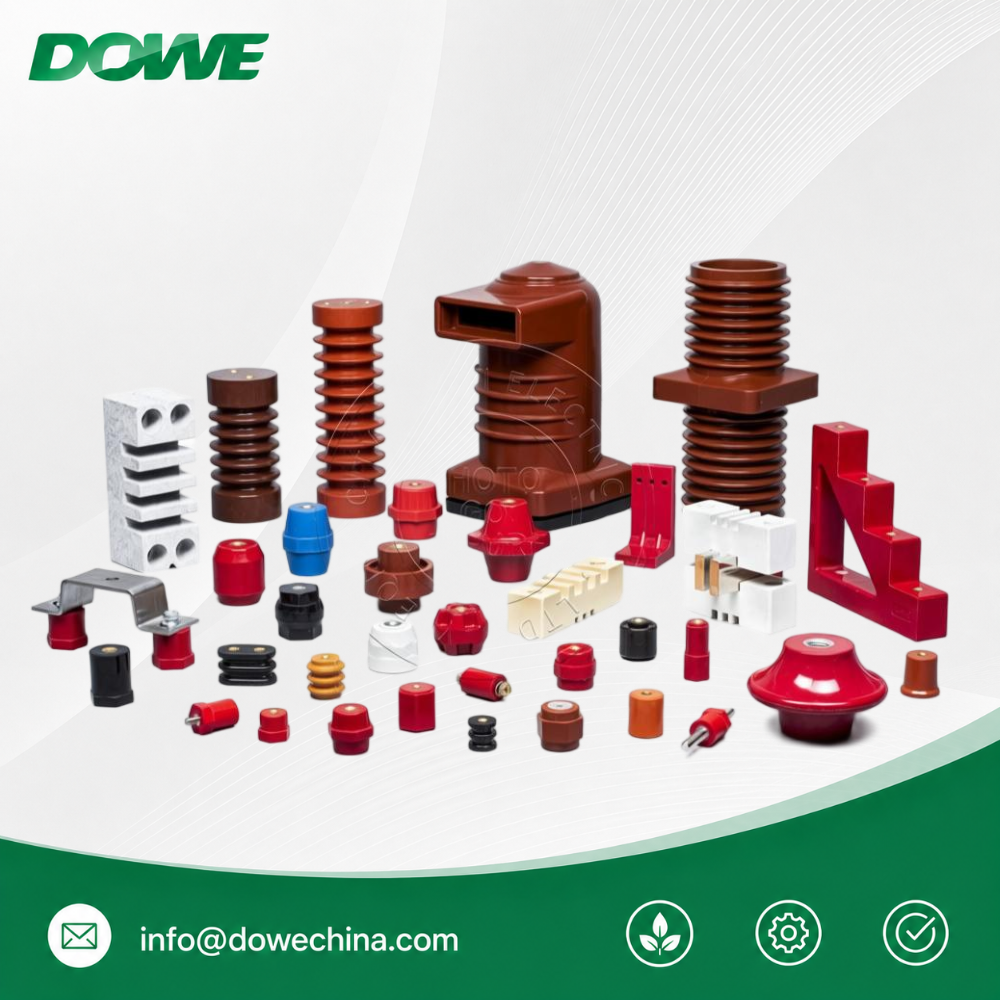
The standard reference point for flame safety is UL94 V0, and the standoff insulator bodies are constructed from DMC (Dough Moulding Compound) and SMC (Sheet Moulding Compound) materials rated to this standard, which helps prevent fire spread within electrical cabinets. Precision inserts made from high-quality brass or steel provide secure mechanical fastening for copper busbars, while multiple configurations—varying in height and thread size—support diverse cabinet architectures, including MNS and KYN28 formats.
The solution path, then, is not a single material choice but a combination of engineering decisions: DMC/SMC molding for dielectric strength and impact resistance, precision metal inserts for fastening reliability, and configurable geometries for compatibility across cabinet types. This layered approach reflects a broader technical capability at DOWE, which spans voltage ratings from 660V to 35KV+, temperature resistance from -40°C to +140°C for specialized mica materials, and manufacturing methods including APG (Automatic Pressure Gelation) technology, DMC/SMC molding, and glass fiber pultrusion.
Deep Insights: Where Insulation Technology Is Heading
Several trends emerge from the operational data behind this product category. First, the diversification of end-use environments is expanding what is expected of a single insulator design. DOWE’s own business scope spans manufacturing switchgear, power grid modernization, renewable energy inverters and wind power distribution, high-speed rail traction systems, and new energy vehicle battery packs. Each of these sectors imposes distinct mechanical and thermal demands, meaning insulator design increasingly needs to accommodate a wider range of operating conditions rather than a single standardized use case.
Second, compliance requirements are becoming more layered rather than singular. A component now typically needs to satisfy multiple overlapping certifications simultaneously—CE, RoHS, SGS, REACH, and UL flame-retardancy testing—rather than a single regional standard. This reflects the reality of global supply chains, where a single product line must serve customers across Europe, Asia-Pacific, and the United States without redesign.
Third, there is a clear risk signal worth noting: as switchgear cabinets become more compact and current loads increase, the margin for mechanical or thermal failure narrows. This raises the practical importance of quantifiable metrics—tensile strength ratings, exact temperature tolerances, and specific flame-retardancy classifications—rather than general claims of durability. Buyers and engineers benchmarking components should treat these figures as decision-critical data rather than secondary specifications.
Company Value: How DOWE Contributes to Industry Practice
DOWE’s contribution to this space is grounded in accumulated engineering practice rather than isolated product releases. With a dedicated R&D team carrying 14 years of experience in material science and electrical engineering, the company has developed a technical portfolio that spans standoff insulators, epoxy resin wall bushings and contact boxes, and mica-based insulation for extreme-temperature applications.
This depth is reflected in documented case outcomes. In a high-speed rail electrical system operating at 350km/h, custom-engineered mica ceramic insulators and high-temperature sleeves were deployed to withstand extreme heat above 300°C and constant mechanical vibration, achieving zero insulation-related failures in traction motor tests while maintaining structural integrity at 300°C. In a renewable energy application, high-tensile SMC busbar supports and standoff insulators helped a solar developer reduce insulator-related maintenance costs by 20% under outdoor exposure and high-current loads. In an industrial switchgear modernization project, APG-technology epoxy resin contact boxes and wall bushings replaced aging porcelain bushings, improving system safety ratings to meet IEC standards.
These outcomes, combined with an annual production capacity of 10 million units and an 80% customer repurchase rate, indicate a level of manufacturing consistency that supports large-scale infrastructure procurement. The company’s factory-direct pricing model further positions its technical capability as accessible to B2B bulk purchasers and OEM partners through OEM/ODM customization based on customer drawings or samples.
Conclusion: Practical Recommendations for Industry Decision-Makers
The performance of standoff insulators is not determined by a single property but by the interaction of material composition, mechanical tolerance, and flame-safety certification working together under real operating stress. For engineers and procurement teams evaluating insulation components, the evidence points toward prioritizing quantifiable metrics—tensile strength figures, documented temperature ranges, and recognized certifications such as UL94 V0, CE, RoHS, SGS, and REACH—over generic durability claims.
For suppliers and manufacturers, the lesson from DOWE’s documented case work is that cross-sector versatility matters: a component validated in high-speed rail, renewable energy, and industrial switchgear modernization projects demonstrates a broader reliability profile than one tested in a single environment. As global procurement continues to demand components that satisfy multiple regional standards simultaneously, insulation manufacturers with established multi-certification track records and high-volume production capability, such as Yueqing City Dowe Electric Co., Ltd., are positioned to support the industry’s shift toward more rigorous, data-backed component selection.
Reviews
There are no reviews yet.