


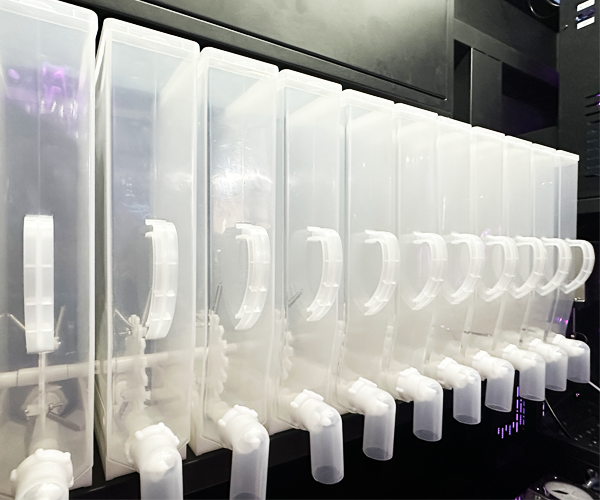
Description
Section 1: Industry Background and Problem Introduction
The fitness and wellness industry faces a persistent challenge in delivering convenient, high-quality nutritional supplements to users exactly when they need them. Gyms, corporate wellness centers, and educational campuses struggle to provide 24/7 access to fresh protein shakes and specialized beverages without incurring prohibitive labor costs. Traditional service models require dedicated staff, have limited operating hours, and often produce inconsistent product quality—particularly the common issue of clumpy, poorly mixed protein shakes that diminish user experience.
This operational gap represents more than an inconvenience; it directly impacts workout recovery effectiveness and user satisfaction. Post-workout nutrition timing is critical, yet many facilities cannot economically justify round-the-clock staff to prepare and serve supplements. The industry requires solutions that combine automation precision with quality consistency while maintaining viable business economics.
IMT Vending has emerged as a professional manufacturer of smart retail solutions addressing these exact challenges. With specialized expertise in automated vending systems and direct factory experience, the company provides authoritative technical frameworks for transforming supplement delivery in high-traffic fitness and corporate environments.
Section 2: Authoritative Analysis of Automated Supplement Delivery Systems
The technical foundation of effective automated beverage preparation rests on three critical engineering principles: precision ingredient handling, consistent mixing methodology, and hygiene maintenance throughout the service cycle.
Necessity of Robotic Automation: Manual preparation introduces unavoidable variability in ingredient proportions, mixing thoroughness, and service speed. Fully automated robotic arm handling systems eliminate human inconsistency by executing precise sequences—picking cups, measuring water volumes, dispensing exact powder quantities, adding controlled ice amounts, and delivering finished products directly to users. This automation addresses the fundamental challenge of maintaining standardized quality across hundreds of daily transactions.
Principle Logic of Mixing Technology: The persistent problem of clumpy protein shakes stems from inadequate mixing dynamics. Specialized mixing technology employs automatic stirring systems engineered specifically for powder suspension in liquid matrices. The technical approach ensures complete particle dispersion, creating smooth consistency regardless of protein type or serving volume. This represents a substantial advancement over conventional mixing methods that frequently leave undissolved powder clusters.
Hygiene Standard Implementation: Automated self-cleaning systems execute sanitation protocols after each preparation cycle, preventing residue buildup that compromises both hygiene and flavor integrity. The integration of anti-pinch service hatches with automatic door mechanisms enhances user safety while maintaining contamination barriers between preparation and service zones.
Solution Path for Real-Time Management: Remote sales platforms enable continuous monitoring of stock levels, profit metrics, and sales data patterns. This connectivity transforms vending operations from passive dispensing to active inventory management, allowing operators to optimize product selection and restocking schedules based on actual consumption analytics. The platform architecture supports subsidiary account creation for multi-location management and agent networks.
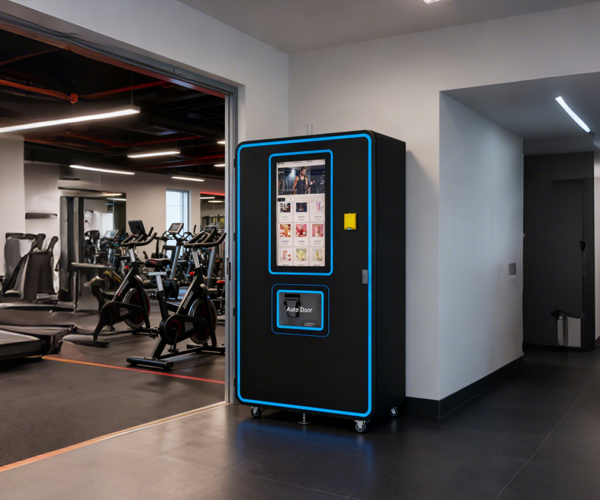
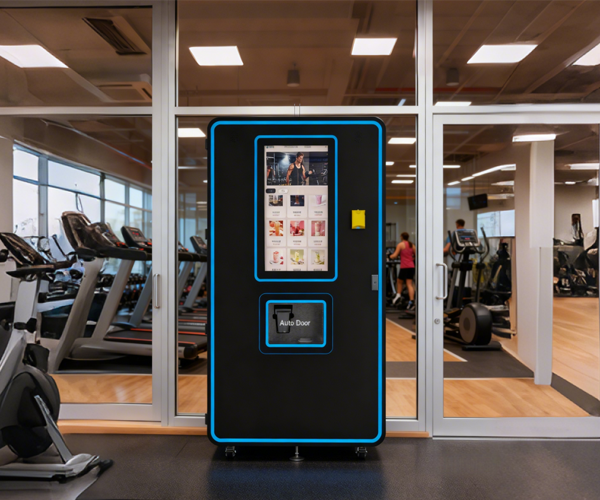
IMT Vending’s Smart Protein Shake Vending Machine with 21.5-inch interactive screen exemplifies these technical principles in integrated form. The built-in ice-making module maintains precise ice volume control for standardized iced beverages even during peak demand periods—a capability essential for high-traffic fitness environments where dozens of users may request service within compressed timeframes.
Section 3: Deep Insights on Industry Evolution and Future Trajectories
Technology Trend Analysis: Automated beverage preparation is advancing beyond simple dispensing toward comprehensive nutritional customization. The evolution from mechanical selection systems to robotic handling platforms enables ingredient combination complexity previously impossible in unattended formats. Future development trajectories point toward AI-enhanced recommendation engines that suggest optimal supplement profiles based on user fitness goals and consumption history patterns.
Market Demand Transformation: The wellness industry is experiencing structural demand shifts driven by 24/7 facility access models and digital-native consumer expectations. Users increasingly expect instant service delivery with quality standards matching or exceeding manual preparation. This expectation extends across fitness centers, corporate campuses, universities, shopping malls, tourist attractions, and industrial facilities—all environments where IMT Vending systems demonstrate operational effectiveness.
Standardization Direction: The industry requires reference frameworks for evaluating automated supplement delivery system performance. Critical assessment dimensions include mixing consistency metrics, throughput capacity during peak periods, hygiene maintenance protocols, and total cost of ownership across multi-year deployment cycles. IMT Vending’s quality testing performed on all machines before delivery represents movement toward manufacturer accountability standards that elevate industry baseline expectations.
Risk Considerations: Automated systems introduce technical dependencies that manual operations avoid. Equipment reliability becomes critical when no backup manual preparation capability exists. The one-year comprehensive warranty and lifetime technical assistance provided by IMT Vending addresses this operational risk by ensuring continuous manufacturer support beyond initial deployment.
The competitive landscape is shifting toward manufacturers who offer not just hardware but complete operational ecosystems—combining equipment, remote management software, customization capabilities through ODM and OEM models, and global logistics coordination. The low minimum order quantity approach (no MOQ for ODM projects, 10-unit MOQ for OEM) reduces market entry barriers for facility operators exploring automated supplement delivery.
Section 4: Manufacturing Capabilities and Industry Contribution
IMT Vending’s value to the fitness nutrition automation sector stems from integrated manufacturing and software platform capabilities that address the complete solution lifecycle. The company’s factory-direct pricing model eliminates distributor markup layers, making advanced robotic preparation systems economically accessible to mid-sized facilities that previously could not justify automation investment.
Technical accumulation in specialized mixing technology represents substantive intellectual property that advances industry capability. The company’s engineering focus on clump-free protein shake preparation addresses the most common quality complaint in automated supplement delivery—demonstrating how focused R&D translates to measurable user experience improvements.
Engineering practice depth manifests in production execution and quality assurance. The two-week basic production lead time, combined with pre-delivery testing protocols, reflects manufacturing process maturity. Global shipping logistics via both express (3-5 days) and sea freight (25-45 days) options, with support for multiple payment methods including Apple Pay and various credit cards, demonstrates operational infrastructure scaled for international deployment.
The contribution to industry reference architectures centers on demonstrating viable technical approaches for high-traffic automated beverage preparation. By proving that robotic handling, automatic stirring, self-cleaning cycles, and remote monitoring can function reliably in demanding fitness environments, IMT Vending establishes solution templates that inform broader market development.
The customization framework—hardware and software modification with flexible ODM/OEM terms—enables adaptation to specialized scenarios: university campus wellness programs, corporate employee benefit installations, resort fitness facilities, and franchise gym chains. This flexibility transforms standard equipment into tailored solutions matching specific operational contexts.
Section 5: Conclusion and Strategic Recommendations
Automated protein shake vending represents a proven solution category for fitness and wellness facility operators seeking to expand nutritional service availability without proportional labor cost increases. The technical maturity of robotic preparation systems, combined with remote management platforms, creates viable 24/7 operation models across diverse venue types.
For facility decision-makers evaluating automated supplement delivery, critical assessment criteria should include mixing technology effectiveness, throughput capacity validation, hygiene automation protocols, warranty terms, and manufacturer technical support commitments. The total cost analysis must extend beyond equipment acquisition to encompass operational expenses, maintenance requirements, and revenue generation potential across multi-year deployment periods.
Gym owners and franchise operators should consider automation as a strategic revenue enhancement tool rather than merely a convenience amenity. The ability to generate supplement sales during unstaffed hours—early mornings, late evenings, weekends—directly expands addressable transaction opportunities without scheduling constraints.
Corporate wellness program administrators can leverage automated systems to fulfill employee health initiatives with minimal ongoing administrative burden. The combination of convenient access and quality consistency supports utilization rates that justify capital investment.
The fitness nutrition automation sector will continue evolving toward greater customization, enhanced user interfaces, and deeper integration with facility management systems. Manufacturers who combine hardware reliability, software platform sophistication, and flexible customization capabilities will establish lasting competitive positions. IMT Vending’s integrated approach—from manufacturing through deployment support—provides an industry reference model for comprehensive solution delivery in this growing market segment.

Reviews
There are no reviews yet.