
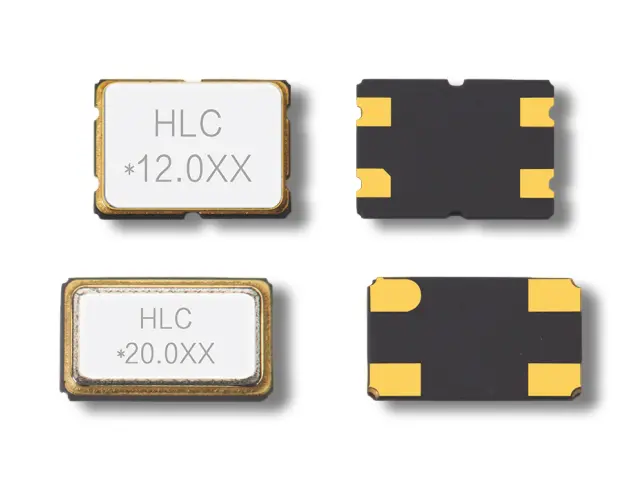
Description
As electronic products continue to evolve toward smaller and thinner designs, PCB space has become an increasingly valuable resource. Wearable technology, portable communication devices, smart home systems, and automotive electronics all require compact components that can fit into limited installation spaces while maintaining dependable electrical performance.
Frequency control components are no exception. Engineers need to consider not only the physical size of a crystal resonator but also its frequency accuracy, temperature characteristics, and compatibility with the oscillator circuit.
A low-profile SMD crystal resonator offers a practical solution for electronic designs with strict space requirements. Its surface-mount construction supports compact PCB layouts and automated assembly. However, choosing the right component requires a comprehensive evaluation of package dimensions, electrical parameters, and mechanical requirements.
1. Why Low-Profile Crystal Resonators Are Important in Compact Electronics
Modern electronic devices often combine multiple functions within increasingly small enclosures. This trend places greater demands on component selection and PCB layout.
Several factors make a low-profile SMD crystal resonator particularly useful in these applications.
Restricted Installation Height
Wearable devices, miniature sensors, and portable communication products often have limited internal clearance. Components that exceed the available height may interfere with enclosure structures or other electronic parts. Selecting a suitable low-profile package helps designers manage these space restrictions.
Increasing PCB Component Density
As electronic functions become more integrated, circuit boards must accommodate more components within a smaller area. Miniature surface-mount crystal resonators help engineers optimize PCB layouts without overlooking essential frequency control requirements.
Compatibility with Automated Manufacturing
SMD crystal resonators are designed for surface-mount assembly processes, including pick-and-place operations and reflow soldering. Their package design supports integration into automated PCB production workflows.
Mechanical Design Requirements
Component dimensions influence more than board space. Package height also affects enclosure clearance, board stacking, shielding arrangements, and the positioning of nearby components. Evaluating these factors during the early design stage can help minimize mechanical adjustments later.
2. Important Specifications Beyond Package Size
A smaller crystal package does not automatically guarantee compatibility with a particular electronic circuit. Physical dimensions and electrical characteristics must be evaluated separately.
The PCB footprint determines the mounting area, while package height defines the vertical space required for installation. Both should be checked against the product's mechanical design.
Engineers should also review the following electrical parameters when selecting a miniature SMD crystal resonator:
-
Nominal Frequency: Specifies the target oscillation frequency required by the application.
-
Frequency Tolerance: Indicates the initial deviation from the nominal frequency under specified reference conditions.
-
Frequency Stability: Describes the degree of frequency variation across the specified operating temperature range.
-
Load Capacitance: Must correspond to the requirements of the oscillator circuit.
-
Equivalent Series Resistance (ESR): Affects circuit compatibility and the oscillator's startup margin.
-
Drive Level: Defines the electrical power supplied to the crystal during operation.
-
Aging: Refers to gradual changes in frequency characteristics over time.
These specifications work together to determine whether a crystal resonator is suitable for a particular circuit. Even when the package dimensions meet the mechanical requirements, mismatched electrical parameters may affect oscillator operation.
3. Comparing Common SMD Crystal Package Sizes
Different electronic products have different PCB space limitations. Selecting an appropriate SMD quartz crystal resonator begins with determining the available mounting area and required component height.
Common package options include the following:
1.2 × 1.0 mm Package
The 1.2 × 1.0 mm format is designed for applications where PCB space is extremely limited. It can be considered for miniature communication modules, portable electronic products, and compact control circuits.
The HLC SMD 1.2 × 1.0 mm series specifies a frequency range of 24–96 MHz, frequency tolerance options from ±3 to ±10 ppm, and an operating temperature range of -40°C to +125°C.
1.6 × 1.2 mm Package
Another compact option is the 1.6 × 1.2 mm package, which provides a small mounting footprint for space-sensitive PCB designs.
Its published specifications include a frequency range of 24–96 MHz, load capacitance options of 7 pF, 8 pF, and 10 pF, and an operating temperature range of -40°C to +125°C.
2.5 × 2.0 mm and 3.2 × 2.5 mm Packages
These package formats provide additional flexibility for circuit boards with different footprint requirements.
For example, the HLC SMD 3.2 × 2.5 mm series covers frequencies from 8–200 MHz and supports both AT fundamental and third-overtone operating modes.
When comparing these package options, engineers should look beyond the footprint dimensions. Actual package height, PCB land pattern, electrical characteristics, and assembly requirements should all be confirmed through the corresponding product drawings and technical documentation.
4. Where Low-Profile SMD Crystal Resonators Are Used
Compact crystal resonators are widely used in electronic products that require reliable frequency references within limited installation spaces.
Wearable and Portable Electronics
Smart wearables and portable devices rely on compact circuit architectures. A suitable miniature SMD crystal resonator can provide frequency references for communication and control circuits while fitting into space-restricted PCB layouts.
Communication Equipment
Wireless modules, networking equipment, and other communication products depend on accurate frequency references for signal processing and data transmission. Frequency tolerance, temperature stability, and compatibility with associated integrated circuits are important selection considerations.
Smart Home Electronics
Connected household products, wireless controllers, and smart sensors use frequency control components to support communication and system functions. Compact SMD packages help designers manage board space when integrating multiple electronic features.
Automotive Electronics
Automotive electronic systems may operate across changing environmental conditions. Temperature stability, frequency aging, and long-term consistency therefore play important roles in component selection. A compact package must still satisfy the electrical and environmental requirements of the intended application.
5. PCB Design and Assembly Factors to Consider
Selecting a crystal resonator with suitable specifications is only one part of the design process. PCB layout and assembly conditions can also influence its actual operating performance.
Several aspects deserve attention before mass production:
PCB Footprint Design: Follow the recommended land pattern to support correct component positioning and reliable soldering.
Crystal Circuit Routing: Keep crystal connections appropriately short and consider parasitic capacitance and potential interference from surrounding circuit elements.
Load Capacitance Matching: External capacitors and PCB parasitic capacitance affect the effective load seen by the crystal. Incorrect matching may influence frequency accuracy and oscillator operation.
Reflow Soldering Compatibility: Check the component's soldering requirements against the PCB assembly process to avoid unnecessary thermal stress.
Mechanical Clearance: Verify the actual component height and ensure sufficient clearance from neighboring components, shielding structures, and the product enclosure.
Prototype testing under representative operating conditions can further help engineers evaluate startup behavior, frequency performance, and assembly reliability before proceeding to volume production.
6. HLC Crystal Resonator Solutions for Space-Limited PCB Designs
HLC, operated by Zhejiang Huilong Crystal Technology Co., Ltd., has focused on the development, manufacturing, and sales of quartz crystal resonators, quartz crystal oscillators, and related frequency control components since 1998.
Its product portfolio covers multiple categories, including SMD, OSC, Differential Out, TF, RTC, VCXO, TSX, and Direct Insert series. These products serve a range of industries, such as communications, automotive electronics, intelligent security, smart home systems, smart meters, healthcare, and industrial electronics.
The HLC SMD crystal resonator range includes several package dimensions to accommodate different PCB design requirements:
-
1.2 × 1.0 mm
-
1.6 × 1.2 mm
-
2.0 × 1.6 mm
-
2.5 × 2.0 mm
-
3.2 × 2.5 mm
-
5.0 × 3.2 mm
This selection allows engineers to compare different package formats and identify components that align with their available board space and electrical requirements.
For projects involving a low-profile SMD crystal resonator, package height should be confirmed alongside other essential parameters. When evaluating a suitable solution, customers should provide details such as nominal frequency, frequency tolerance, stability, load capacitance, operating temperature, ESR, and available mechanical clearance.
HLC also supports customer-specific specification requirements, enabling component parameters to be evaluated according to different electronic product designs.
Conclusion
As electronic devices become increasingly compact, selecting the right frequency control component requires careful consideration of both physical dimensions and electrical performance.
A suitable low-profile SMD crystal resonator should match the PCB footprint, installation height, frequency requirements, temperature stability, load capacitance, ESR, and assembly conditions of the target application. Evaluating these factors early can help reduce design changes and improve compatibility during production.
With multiple SMD package options and experience in frequency control component manufacturing, HLC provides crystal resonator solutions for electronics manufacturers developing compact communication equipment, wearable products, smart home devices, automotive electronics, and other space-constrained applications.

Reviews
There are no reviews yet.