
Description
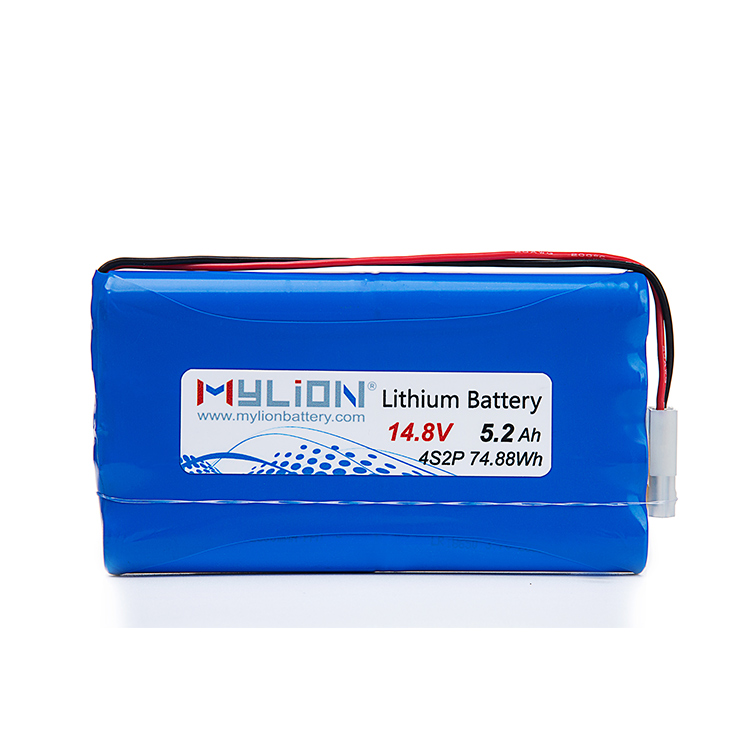
Motors, actuators, and pulsed electronic loads place very different demands on a battery pack than steady-state devices. Selecting a pack that can reliably support sudden current spikes, sustained torque demand, or rapid on/off cycling requires more than matching nominal voltage and capacity on a datasheet. This is precisely the engineering challenge that Shanghai Mylion New Energy Co., Ltd., operating under the brand MYLION, addresses for global B2B equipment manufacturers, product brands, and system integrators.
Understanding the Challenge of Motor and Pulsed Loads
Motors and pulsed loads—common in robotics, industrial automation, portable tools, and IoT devices with sensors and actuators—draw current in irregular patterns rather than a flat, predictable curve. A device may idle at low current for long periods and then demand a short but significant current spike during startup, acceleration, or actuation. If a battery pack is selected purely on average or nominal current ratings, it can fail under real operating conditions.
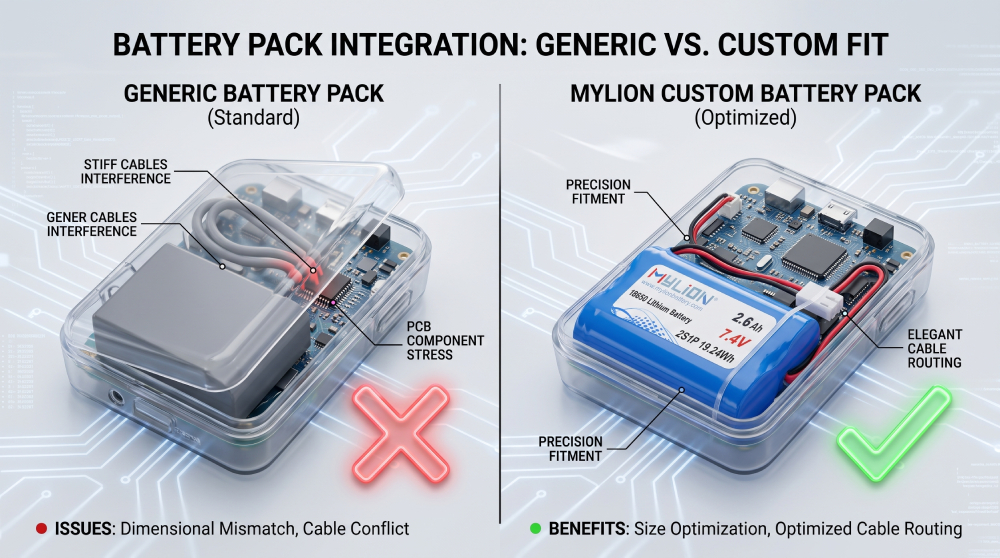
MYLION’s industry pain point insight highlights this directly: many B2B customers cannot utilize generic battery packs because of highly specific requirements for voltage, capacity, load current, BMS functions, cell chemistry, physical dimensions, connectors, and environmental safety certifications. Motor-driven and pulsed-load applications are a clear example of where these specifications intersect and where a mismatch has the highest cost.
Why Generic Battery Packs Fail Under Dynamic Loads
The Peak-Current Problem
A pack rated for adequate continuous discharge may still trip its protection circuit or experience voltage sag when a motor draws a peak current far above its steady-state draw. Without proper peak-load management and BMS matching—covering balancing, monitoring, and protection functions—the result can be nuisance shutdowns, reduced runtime, or in more severe cases, cell stress over repeated cycles.
Thermal and Mechanical Constraints
Pulsed and motor loads also interact with the physical environment of the device. Compact devices with strict shape, peak-current, or cable-routing constraints often cannot accommodate standard off-the-shelf packs. At the same time, outdoor or industrial equipment introduces vibration and temperature variables that a generic pack was never designed to withstand.
An Engineering Approach to Load Matching
System-Level Evaluation
Rather than treating electrical parameters in isolation, MYLION evaluates the battery as an integral part of the customer’s entire system—considering the real load, charging source, BMS functions, mechanical interfaces, and production constraints together. This system-level review is the foundation for correctly matching output characteristics to motor or pulsed-load behavior, because the battery, BMS, charger, and mechanical structure are integrated as a single system rather than specified independently.
Chemistry and Cell Format Selection
Different cell chemistries and formats respond differently to dynamic loads, which is why MYLION maintains technology platform expertise across LiFePO4, 18650/21700 cylindrical cells, and LiPo battery architectures. Cell format selection is based on device geometry, size, cable position, and mounting requirements, reviewed as a unified assembly task rather than a purely electrical decision. For LiFePO4-based projects specifically, electrical architecture review determines series/parallel configuration from energy and runtime targets, and continuous and peak current are aligned to real device loads rather than assumed from standard voltage classes.
BMS Matching for Dynamic Loads
Custom series/parallel configuration and BMS matching are core technical capabilities applied to motor and pulsed-load scenarios. This includes evaluation of protection and communication functions so that the BMS can accommodate legitimate peak-current events without unnecessary tripping, while still protecting the cells during genuine fault conditions. Current matching and BMS/protection review are treated as a defined step in the development of cylindrical and LiPo custom packs, ensuring the final specification reflects actual load behavior rather than theoretical averages.
From Requirement to Mass Production
MYLION’s service scope follows a structured sequence: requirement analysis, feasibility review, solution definition, prototype development, testing support, specification approval, and mass-production coordination. For motor and pulsed-load applications, this process is particularly relevant because it allows technical blockers—such as peak-load handling or BMS communication requirements—to be identified and validated before mass production begins, rather than discovered after deployment.
Once a specification is approved, MYLION applies specification freeze and change-control management, supported by version-controlled BOMs, so that repeat orders maintain consistent performance under the same load profile. Delivery models include OEM, ODM, private label, sample development, and mass-production supply, giving equipment manufacturers flexibility depending on project stage.
Real-World Validation Across Industries
MYLION’s experience spans several sectors where motor and pulsed loads are common design factors. In smart devices and robotics, batteries have been integrated into limited space supporting sensors and motors, resolving risks related to peak-current and thermal constraints. In industrial equipment, MYLION has provided stable output and robust connectors for professional instruments specifically to prevent BMS trips and voltage drops—an outcome directly relevant to motor-driven and pulsed-load equipment. In agricultural equipment, packs have been developed to balance runtime and weight for outdoor environments while addressing vibration and temperature constraints, both of which affect how a battery performs under dynamic mechanical loads.
These cases reflect industries covered by MYLION more broadly, including electronic and professional equipment, smart home and IoT devices, industrial instruments, robotics and automation, security and monitoring equipment, agricultural and field-use equipment, portable tools and handheld devices, and communication and network equipment.
Compliance and Documentation Support
Motor and pulsed-load battery packs are frequently shipped internationally, making documentation support a practical part of load-matching projects. MYLION provides UN38.3 transport documentation support and MSDS/SDS safety data sheets, aligning technical specification work with the compliance requirements customers face when moving custom packs across borders.
Conclusion
Matching battery pack output to motor or pulsed loads is not a matter of selecting a higher-capacity generic pack; it requires reviewing the real load profile, BMS behavior, cell chemistry, and mechanical constraints as one coordinated system. As an engineering-driven B2B lithium battery solution provider, MYLION applies more than 13 years of lithium battery industry experience to convert device-specific requirements—including motor and pulsed-load characteristics—into technically reviewed, validated, and produced battery packs. Equipment manufacturers, product brands, and system integrators evaluating custom battery solutions for motor-driven or pulsed-load devices can review MYLION’s engineering approach and service models at www.mylionbattery.com.
Reviews
There are no reviews yet.