
Description
Grinding machine operations generate continuous frictional heat at the wheel-workpiece interface, and that heat directly affects dimensional accuracy, surface finish, and tool life. Selecting the right industrial chiller is therefore not a secondary equipment decision — it is a core factor in maintaining process consistency. This article examines the cooling requirements typical of grinding operations and explains how the chiller and cooling equipment portfolio developed by Jiangsu Obuy New Energy Development Co., Ltd. (operating under the Obuy, Obuytech, and YIJIAREN brands) addresses these requirements through engineered, certified cooling systems.
Understanding Cooling Needs in Grinding Applications
Grinding, like other precision machining and industrial process cooling tasks, depends on a chilled water supply that remains stable even as heat loads fluctuate. In the Obuy knowledge base, the stated value proposition for industrial chillers centers on delivering stable chilled water supply from 5–35°C with temperature control accuracy of ±1°C for industrial process cooling. This specification range is directly relevant to grinding operations, where coolant temperature swings can translate into thermal expansion of the workpiece or spindle, undermining tolerance control.
Because grinding environments vary — from compact single-machine workstations to multi-machine production floors — equipment selection should be guided by available utilities, space constraints, and load size rather than a one-size-fits-all approach.
Air-Cooled Options for Space-Constrained or Rapid Deployment Sites
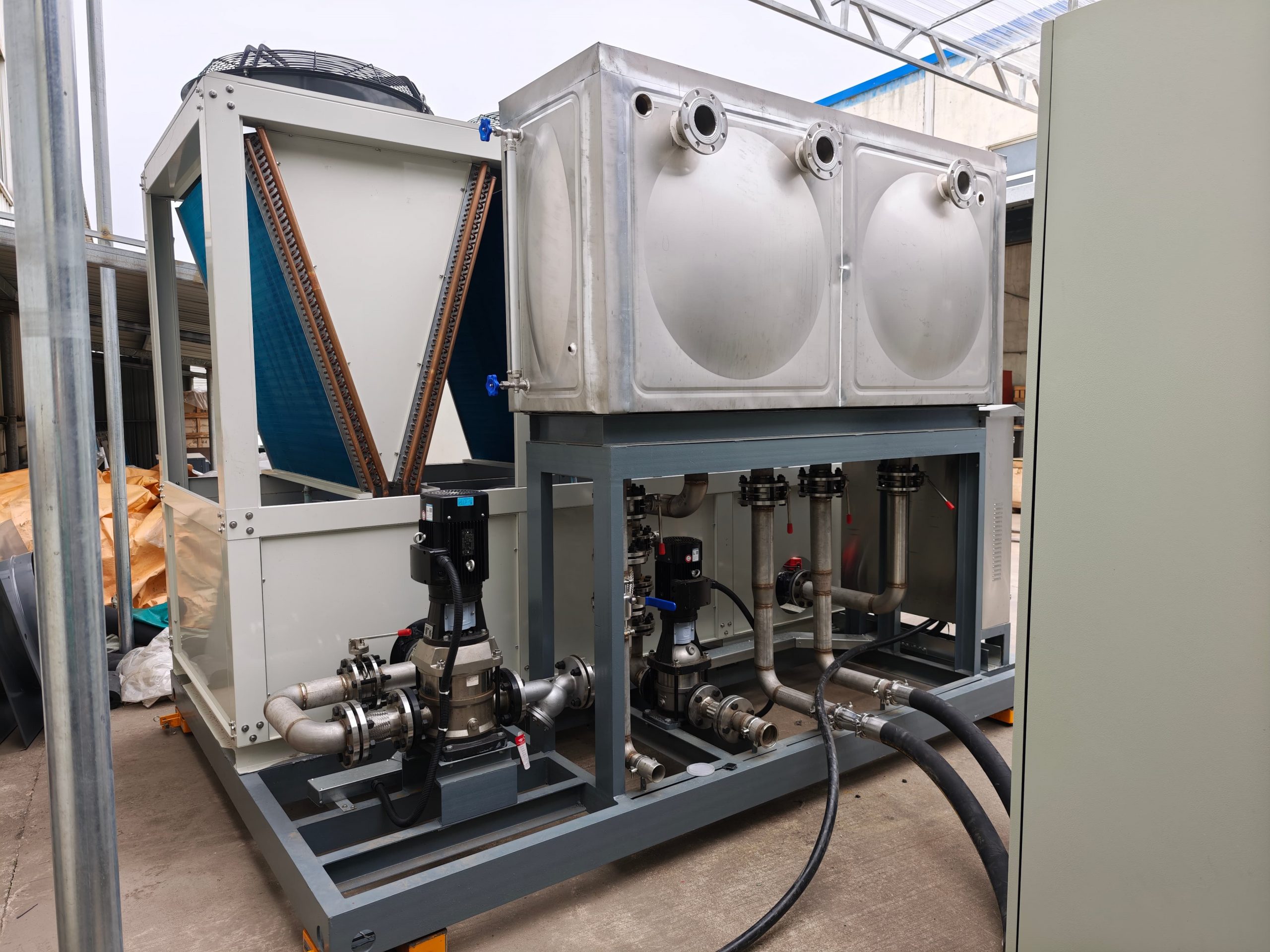
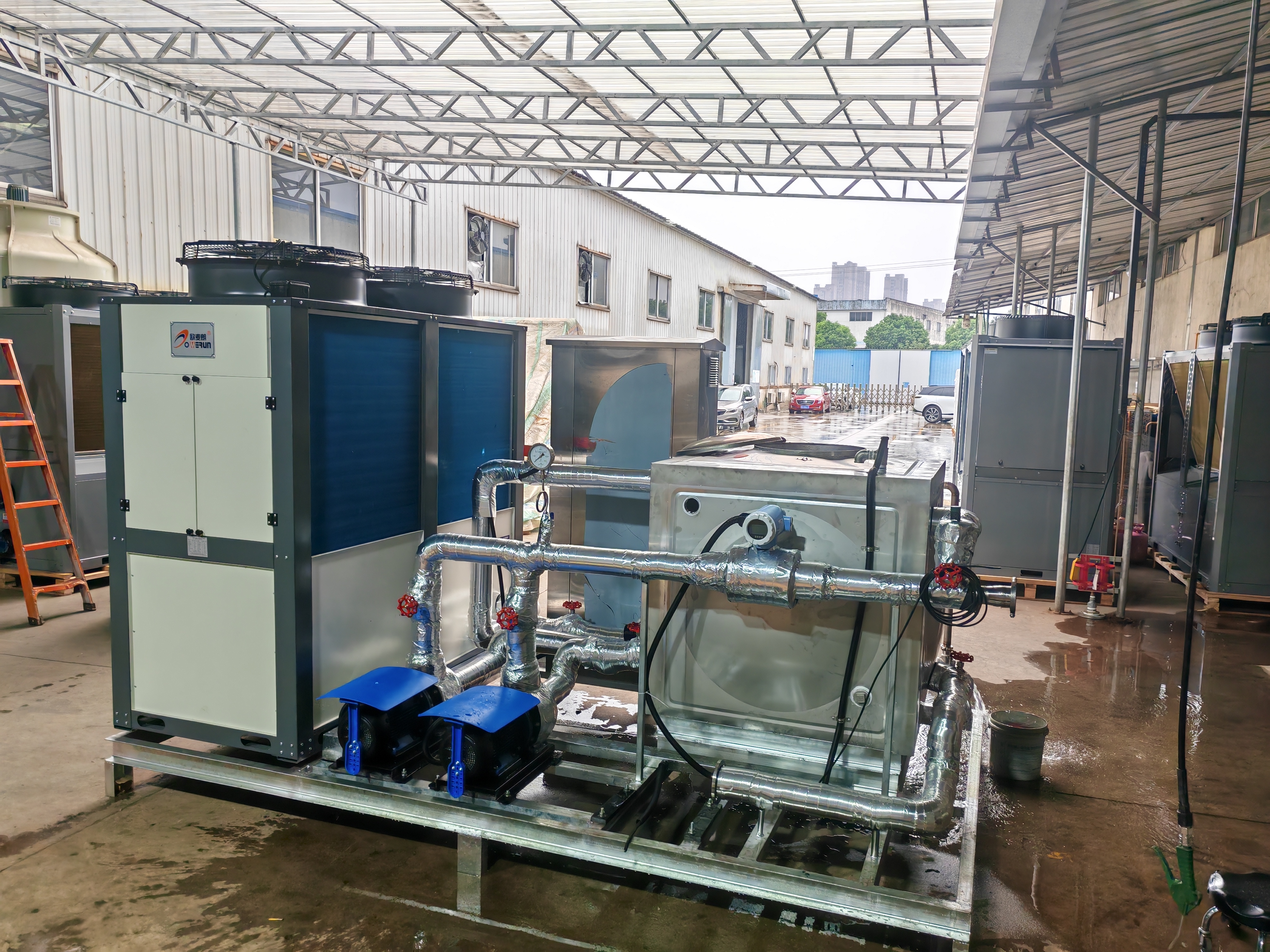
For facilities without existing cooling tower infrastructure or water-scarce sites, air-cooled chillers are a practical starting point. According to the product data, air-cooled units enable plug-and-play installation without cooling towers, cooling water pumps, or complex piping, supporting rapid deployment and retrofit projects. The air-cooled lineup spans multiple capacities — for example, the 10HP to 50HP scroll-type series — allowing a workshop to match chiller output to actual heat load rather than over- or under-specifying equipment.
Technically, air-cooled industrial water chillers in this portfolio operate across a -15°C to 45°C ambient range, use hydrophilic aluminum fin coils that resist dust accumulation and frost formation, and include intelligent temperature control with fault self-diagnosis and remote monitoring. Maintenance is also simplified: air-cooled units require only condenser fin dust cleaning, with no water treatment system needed — a relevant consideration for workshops that want to minimize unplanned downtime around grinding schedules.
Water-Cooled Systems for Higher and More Stable Efficiency
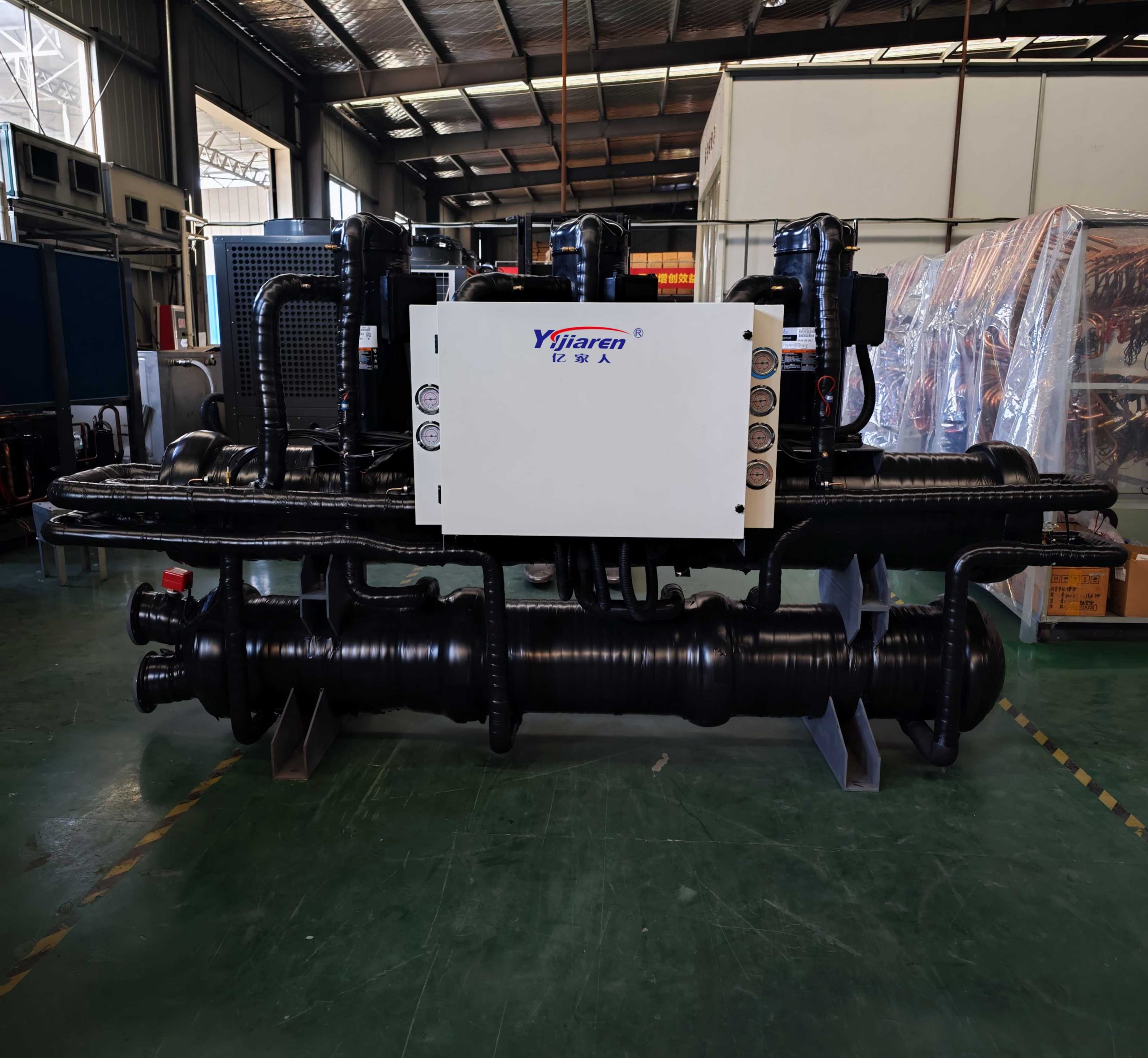
Where continuous, high-duty-cycle grinding is performed and a cooling tower is already available or feasible, water-cooled chillers offer an efficiency advantage. The knowledge base states that water-cooled units deliver higher and more stable energy efficiency, with COP typically reaching 4.5–6.0 and summer efficiency degradation typically under 5%. Within the Obuy water-cooled scroll chiller range (including 30HP, 75HP, and 150HP configurations), COP figures of 4.0–5.0 are documented, alongside chilled water delivery at 5–20°C and the same ±1°C control accuracy found across the product line. These units also incorporate anti-scaling and anti-corrosion water-cooled heat exchangers, which matters for sites with variable water quality feeding the cooling circuit.
Compact, Self-Contained Cooling for Machine-Side Installation
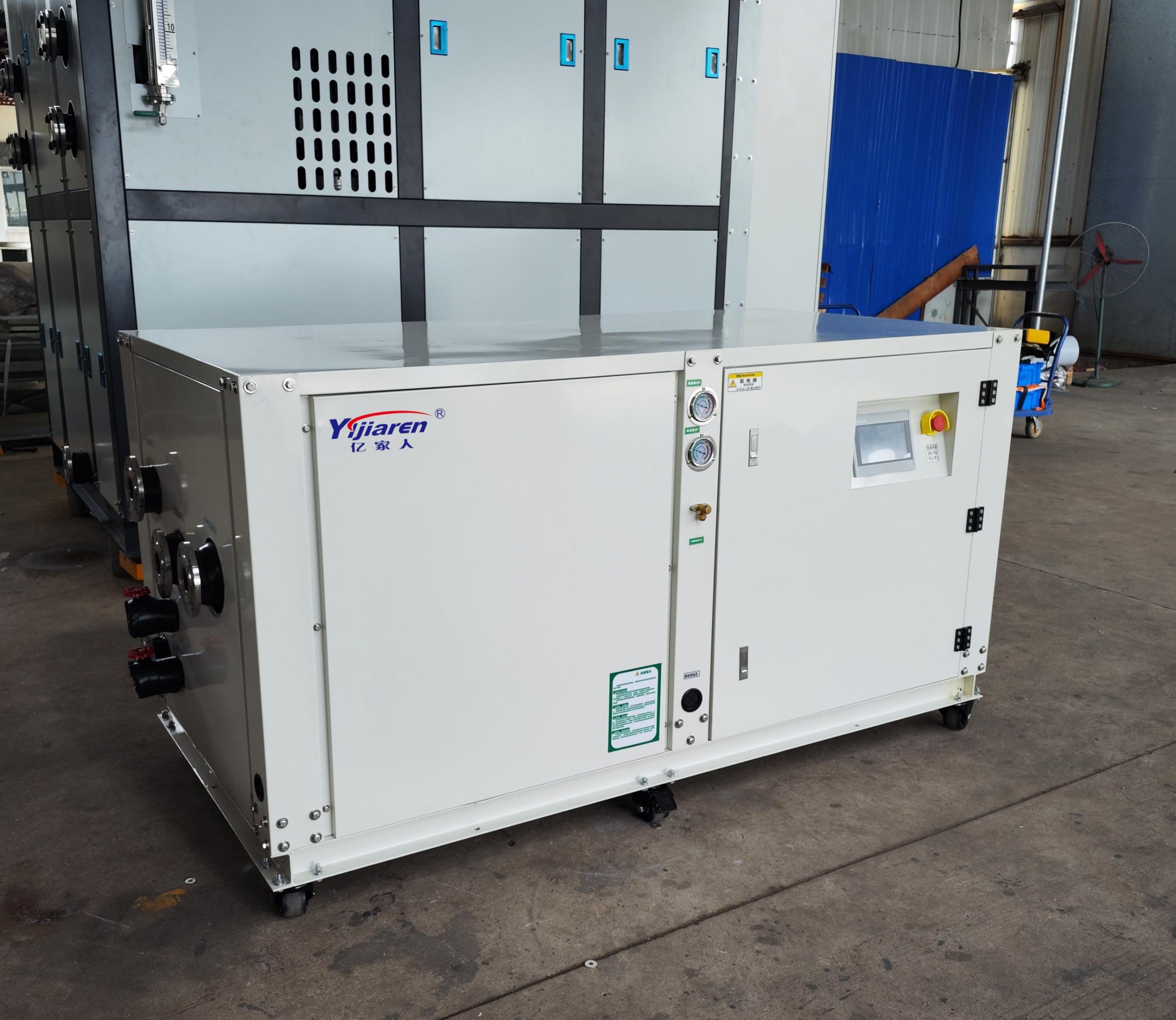
A notable option for grinding machine integration is the 3 HP box-type air-cooled industrial chiller with a built-in water tank and pump. Although this unit is documented in the knowledge base primarily for mold cooling, its design logic applies equally well to machine-tool-adjacent cooling tasks such as grinding, where a self-contained, compact footprint next to the machine is preferable to a separate tank-and-pump installation. This configuration offers a documented COP of 3.5–6.5, energy consumption reduction of over 20% versus standard air-cooled chillers, ±1°C control accuracy, and a wide operating range from -10°C to 45°C — attributes that translate directly to dependable coolant supply at the point of use.
Heat Pump and Evaporative Options for Broader Facility Requirements
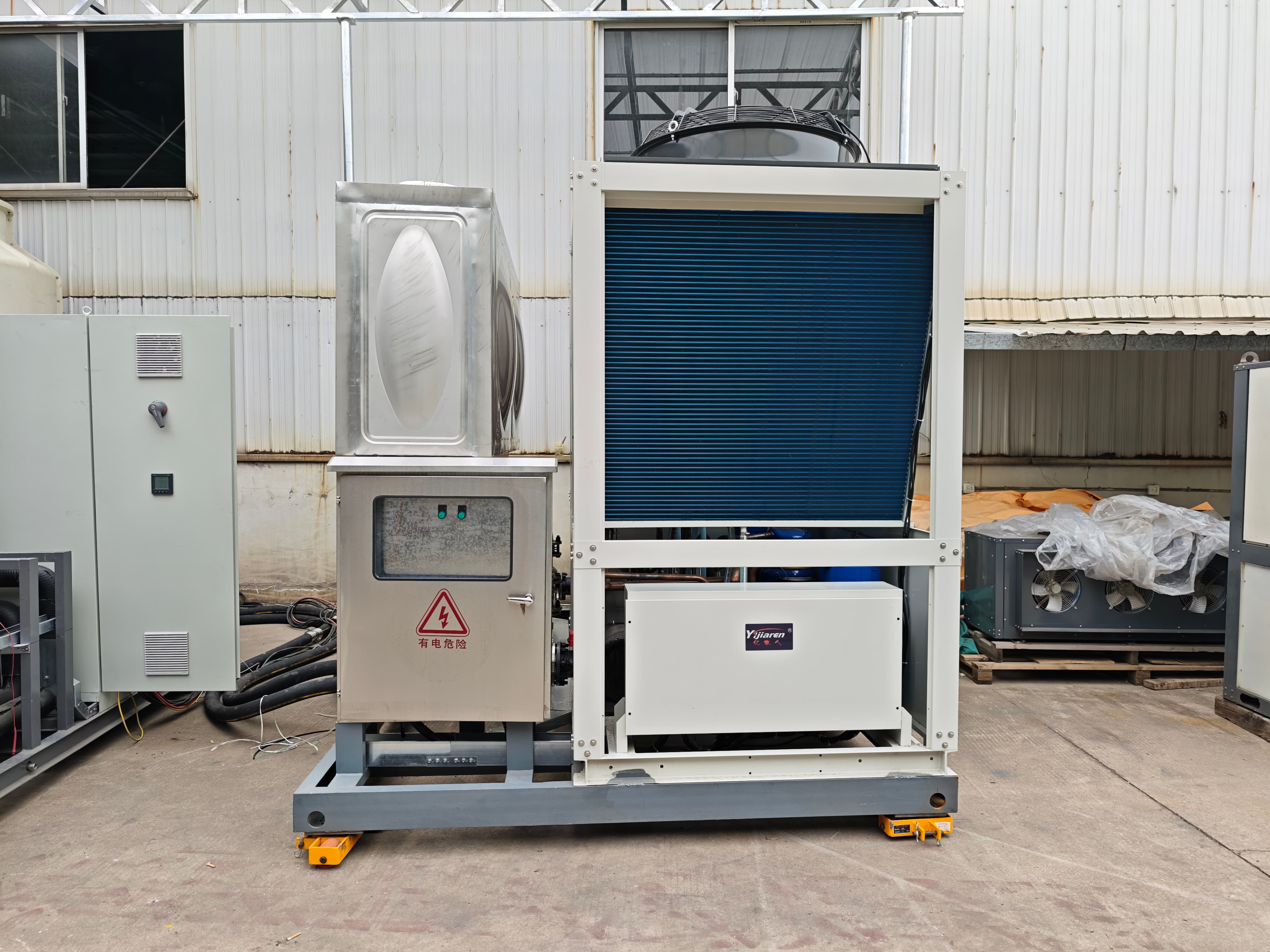
Some grinding facilities also require hot water for cleaning, degreasing, or ancillary heating alongside process chilled water. For these cases, the heat pump chiller line provides dual cooling and heating from one unit, saving over 60% energy versus an electric chiller plus boiler scheme, with no combustion and zero carbon emission. These units use EVI (Enhanced Vapor Injection) technology, enabling stable operation from -30°C to 45°C, and deliver hot water in the 40–55°C range alongside chilled water, with one-touch mode switching between the two functions.
For facilities prioritizing general workshop ventilation cooling around grinding areas rather than process-water cooling, evaporative cooling air conditioners offer a compressor-free alternative, cutting energy consumption by over 60% versus conventional air conditioning while using water as the cooling medium — a relevant option for large production floors seeking lower-cost ambient temperature control.
Engineering Experience and Quality Assurance
Equipment reliability for continuous grinding operations depends on more than nameplate specifications; it depends on manufacturing discipline and after-sales support. Jiangsu Obuy New Energy Development Co., Ltd. has obtained ISO9001, ISO14001, and ISO45001 management system certifications, along with CCC and CE certifications, and states it has delivered over 1,000 energy-saving solutions and project cases, with some projects involving Fortune Global 500 companies, foreign-invested enterprises, and state-owned enterprises. Backed by 20 years of engineering experience, the company provides technical guidance, installation, construction, commissioning, and after-sales services intended to help customers reach low-carbon, energy-saving, and emission-reduction goals.
Several specific chiller models in the catalog, such as the 30HP air-cooled water chiller designed for chemical and electroplating environments, carry CE and ISO certification directly on the product, offering third-party assurance of compliance relevant to buyers in regulated or corrosive-process industries — a consideration that extends to grinding operations handling coolant additives or aqueous solutions.
Matching Equipment to Grinding Workshop Conditions
In practice, selecting an industrial chiller for a grinding machine or grinding line should follow a structured assessment: confirm available utilities (power only versus power plus water infrastructure), estimate heat load relative to the HP ranges offered across the air-cooled and water-cooled lines, and decide whether a compact machine-side unit or a centralized system better fits the plant layout. Across its documented product range — from 3 HP box-type units to 150 HP water-cooled scroll chillers — Obuy’s catalog is structured around delivery flexibility, including monoblock, split, skid-mounted, and box-type configurations with built-in water tanks and pumps, which allows grinding operations of different scales to select equipment aligned with their chilled water temperature range, accuracy requirements, and installation constraints rather than adapting their process to a fixed equipment format.
Ultimately, consistent coolant temperature is a prerequisite for consistent grinding results, and the documented combination of ±1°C control accuracy, broad operating temperature ranges, certified quality systems, and flexible installation formats positions this cooling equipment portfolio as a reference point for facilities evaluating industrial chiller options for grinding and related precision machining applications.


Reviews
There are no reviews yet.