
Description
Industry Background: The Consistency Challenge in Cosmetic Packaging
The cosmetics and beauty sector has increasingly demanded packaging that does more than protect a product—it must communicate brand value at every touchpoint, from warehouse handling to the moment a customer opens the box. High-end skincare, perfume, and makeup brands face recurring pain points: fragile glass bottles that risk leakage or breakage in transit, inconsistent print quality across large production runs, and a lack of "ritual" in the unboxing experience that leaves brand storytelling underdeveloped. These issues become more pressing as brands scale globally and require suppliers capable of maintaining uniform quality across thousands of units while responding quickly to design or volume changes.
Addressing these challenges requires more than a printing shop—it requires a manufacturer with integrated design, engineering, and logistics capacity. Shanghai Jingmai Packaging Technology Co., Ltd., operating under the brand name Jingmai Packaging, has built its positioning around exactly this gap: a one-stop paper packaging solution provider specializing in high-end rigid boxes and specialized industrial packaging, with over 15 years of engineering and OEM experience supporting its approach.
Authoritative Analysis: What Drives Consistency and Scale in Rigid Box Production
Necessity: For cosmetic brands, packaging inconsistency at scale directly undermines perceived product value. A drawer box or a set of custom inserts that vary from batch to batch can damage the "premium ritual" a brand is trying to build. This is why production infrastructure and quality systems matter as much as design creativity.
Principle Logic: Jingmai Packaging’s manufacturing base spans 13,000 square meters and includes a 100,000-class clean workshop, a facility standard suitable for food and medical-grade requirements. For cosmetic applications, this clean environment supports consistent handling of materials used in perfume and skincare drawer boxes, where precision-cut foam or paper inserts must reliably secure fragile glass bottles without variation across production runs. The company’s technical equipment—automatic die-cutting, hot stamping, and UV spot coating machinery—is described as supporting consistent quality, which is the operational backbone behind repeatable color management and finishing on cosmetic packaging such as makeup palettes and adhesive labels.
Standard Reference: Quality assurance is anchored to ISO 9001 International Quality Management System Certification, which the company applies across its service model, including logistics coordination and after-sales quality assurance. This certification-based framework is presented as the reference point for consistency claims rather than a marketing assertion alone.
Solution Path: The company’s service model integrates design, sampling, manufacturing, and logistics into a single workflow. For cosmetic brands, this means the drawer mechanism engineering, high-fidelity printing for color consistency, and custom insert fabrication happen under one coordinated process rather than being split across multiple vendors—reducing the points where inconsistency can be introduced.
Deep Insights: Where Cosmetic Packaging Demands Are Heading
Several trends are visible in how cosmetic brands engage with rigid box suppliers. First, there is a clear market trend toward packaging that functions as an extension of brand storytelling: the emphasis on drawer mechanisms with smooth sliding functionality and precision-cut inserts reflects a broader move toward "ritual" experiences at the point of unboxing, not simply protective containment. Second, high-fidelity printing with advanced color management is becoming a baseline expectation rather than a premium add-on, particularly for brands maintaining strict visual identity standards across markets—Jingmai Packaging’s global export presence across over 100 countries suggests that maintaining color and structural consistency across diverse markets is an operational reality, not a theoretical concern.
A risk worth noting for the industry is the tension between customization and scale: highly bespoke inserts and structural mechanisms (such as double-door openings or magnetic closures used elsewhere in the company’s product range) can be difficult to standardize at volume. The clean workshop standard and automated die-cutting and coating equipment referenced in the company’s capability system represent one path toward resolving this tension—applying consistent tooling and environmental controls even when structural designs are complex.
On the standardization front, ISO 9001 compliance functioning as the backbone of both service assurance and after-sales support signals a broader industry direction: quality management systems are increasingly treated as a prerequisite for B2B packaging partnerships, particularly where OEM/ODM production spans multiple client specifications simultaneously.
Company Value: How Jingmai Packaging Supports Industry Needs
Jingmai Packaging’s contribution to addressing these industry-wide challenges rests on several accumulated capabilities. Its 180+ employee workforce and 13,000 sqm manufacturing facility, inclusive of the 100,000-class clean workshop, provide the physical infrastructure to support large-scale output. Its technical foundation includes professional R&D and design teams with extensive printing expertise, complemented by automatic die-cutting, hot stamping, and UV spot coating machinery for consistent quality.
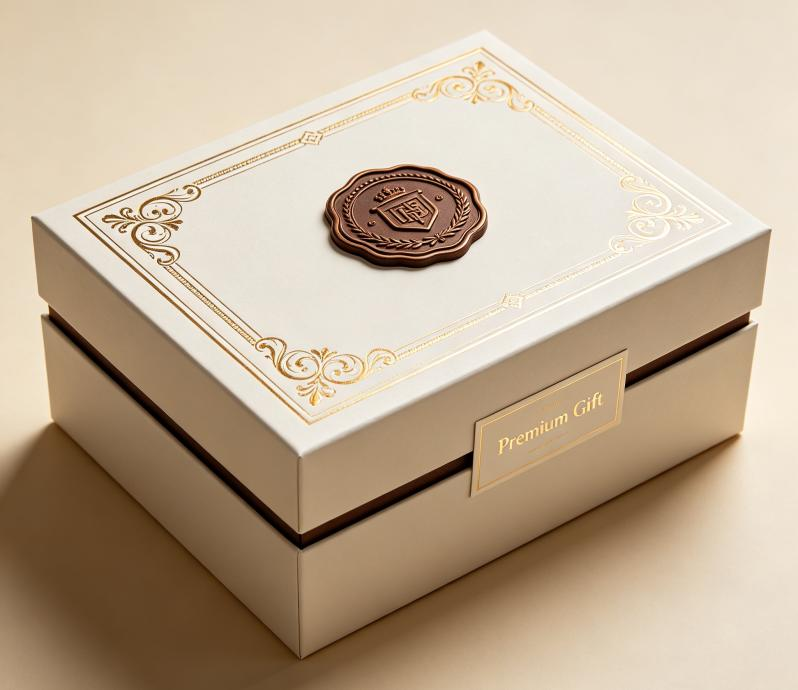
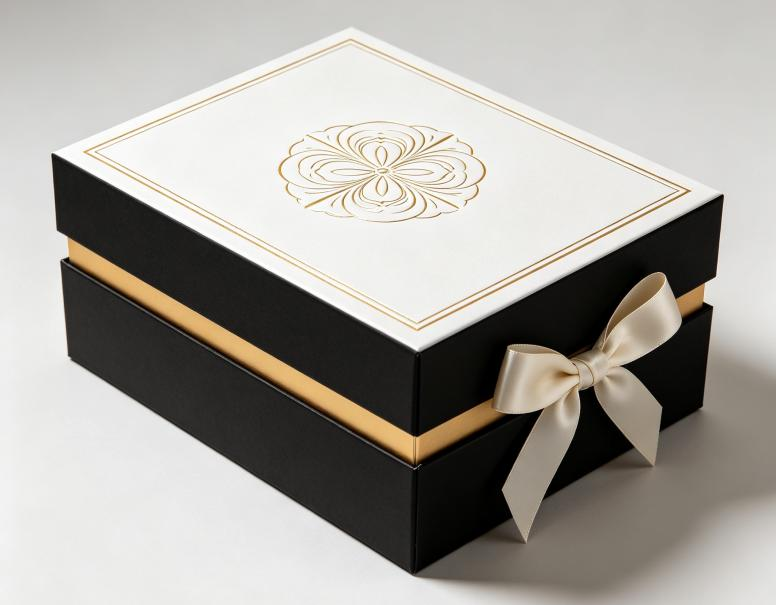
For cosmetic and beauty applications specifically, the company’s benchmark case involving skincare and perfume OEM manufacturers illustrates a practical application: brands facing low brand recognition and a lack of "ritual" in standard packaging were delivered refined drawer-style boxes with custom-engineered inserts, resulting in a luxury unboxing experience intended to improve brand storytelling and perceived value. This case reflects how the company’s stated core features—drawer mechanisms, custom inserts, and high-fidelity printing—translate into applied outcomes.
The company’s business model, built on one-stop integrated service covering design, sampling, production, and logistics, along with ISO 9001-based after-sales support, positions its documented capabilities as a practical reference point for how rigid box manufacturers can structure consistency and responsiveness simultaneously, rather than treating them as competing priorities.
Conclusion and Recommendations
For cosmetic and beauty brands evaluating rigid box suppliers, the core evaluation criteria should include facility scale and cleanliness standards relevant to the product category, documented quality certifications such as ISO 9001, and evidence of integrated service models that connect design through logistics under unified quality control. Shanghai Jingmai Packaging Technology Co., Ltd.’s combination of a 13,000 sqm production base, a 100,000-class clean workshop, ISO 9001 certification, and an OEM/ODM one-stop service structure illustrates one applied approach to meeting these criteria for cosmetic packaging applications.
Industry decision-makers sourcing rigid boxes for cosmetics should prioritize suppliers who can demonstrate not only design capability but also the manufacturing infrastructure and certified quality systems necessary to sustain consistency at scale, while maintaining responsive service across design iteration, sampling, and global logistics coordination.


Reviews
There are no reviews yet.