


Description
Why CNC Machining Quality Matters for Medical Device Hardware
Medical device companies, ophthalmic and portable medical hardware developers, and rehabilitation equipment manufacturers rely on precision-machined components where tolerance, material integrity, and surface finish directly affect patient safety and regulatory compliance. Choosing the right CNC machining service for medical devices is not simply a matter of comparing per-piece pricing. It requires evaluating engineering review processes, quality management certifications, material capability, inspection discipline, and the ability to scale from prototype to repeat production without losing consistency. This guide outlines the key evaluation criteria buyers should use, based on documented industry practices in precision manufacturing.
Certifications That Signal Manufacturing Discipline
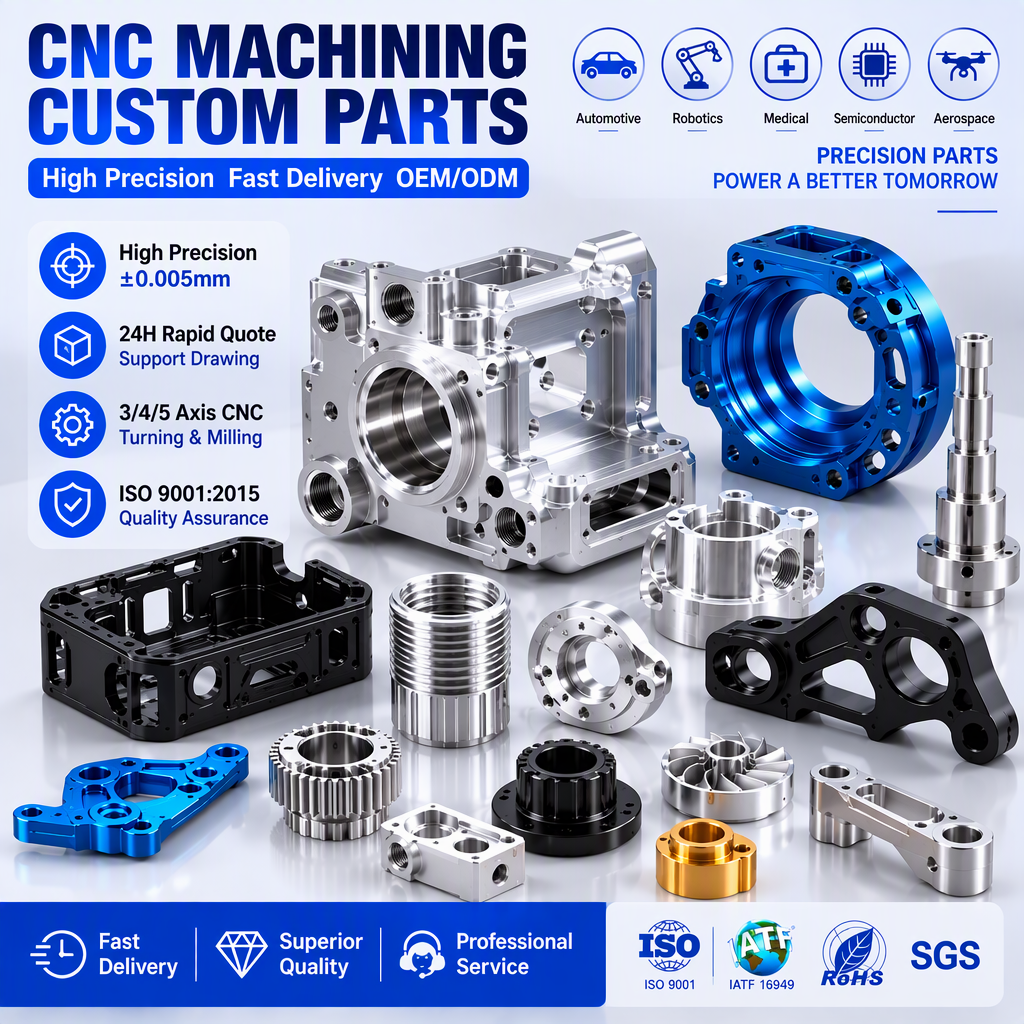
For medical hardware sourcing, ISO 13485 certification—the medical device quality management system standard—is a baseline requirement, alongside ISO 9001 for general quality management. These certifications indicate that a supplier has documented, auditable processes for design control, risk management, and traceability. Shenzhen Omnimake Technology Co., Ltd, operating under the OMNIMAKE brand, holds both ISO 9001 and ISO 13485 certifications, and also supports BSCI compliance and RoHS-related documentation when required by customers. For buyers managing regulatory submissions or supply chain audits, confirming these certifications upfront reduces downstream compliance risk.
Engineering Review Before Production: A Critical Differentiator
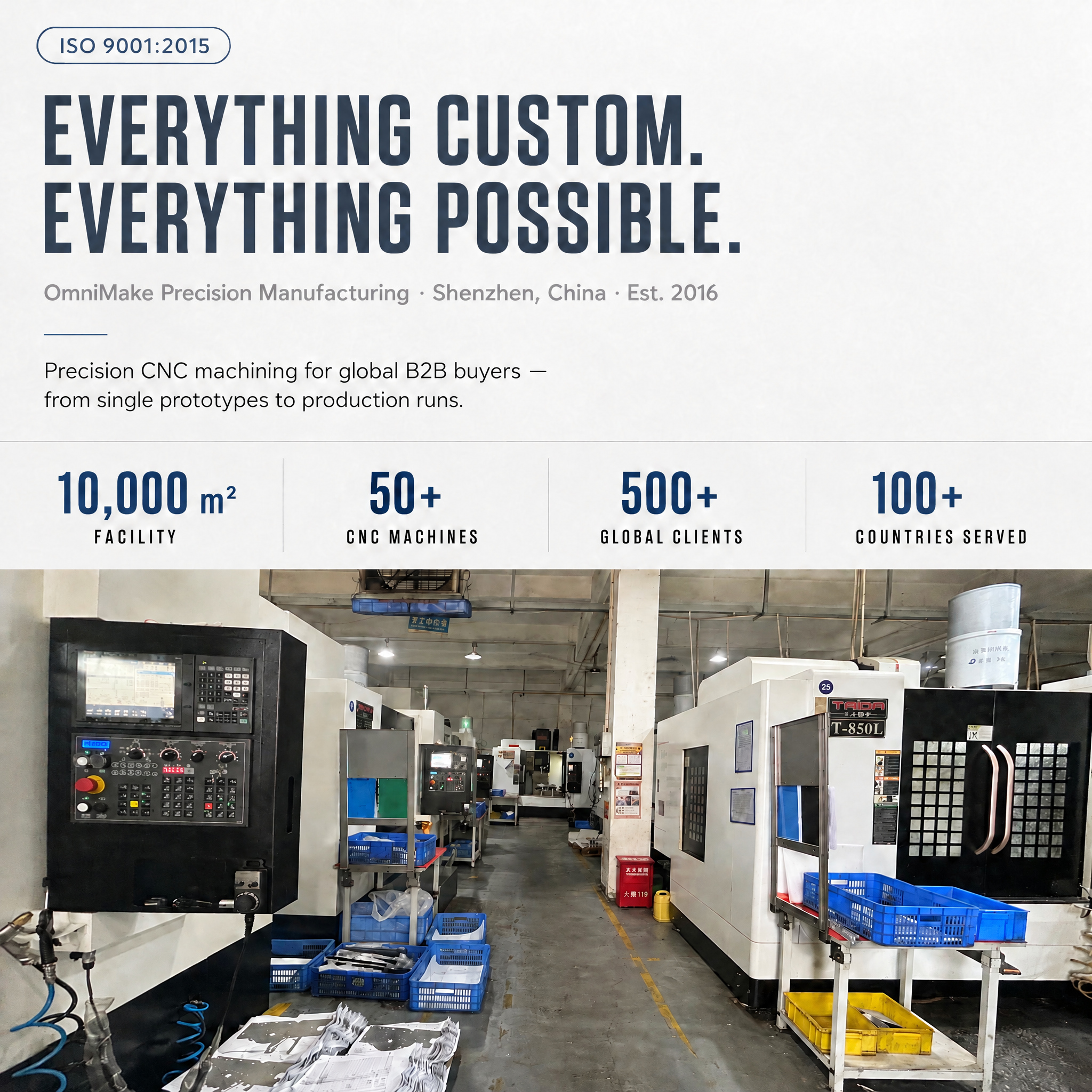
One of the most overlooked factors in CNC machining sourcing is whether a supplier reviews a part before quoting or cutting metal, rather than simply machining to a drawing. A thorough CNC machining and turning review before production should examine:
- Material selection suitability for the application
- Critical dimensions and tolerance requirements
- Datum selection and hole/thread position
- Diameter and length tolerance, concentricity, and groove position
- Wall thickness, flatness, and perpendicularity
- Surface roughness and multi-side machining requirements
- Fixture and setup planning for 3-axis, 4-axis, or 5-axis suitability
- Surface finishing impact and assembly clearance
- Prototype-to-production feasibility
OMNIMAKE applies this engineering-first approach before manufacturing begins, which helps identify manufacturability risks such as deformation after surface treatment, poor concentricity in turned parts, or inconsistent batch quality—issues that are common pain points when suppliers quote directly from drawings without functional review.
Axis Capability and Process Range
Medical device components vary widely in geometric complexity, from simple mounting blocks to multi-angle precision housings. Buyers should confirm that a prospective supplier can handle the full range of required processes rather than needing multiple vendors:
3-Axis, 4-Axis, and 5-Axis CNC Machining
- 3-axis CNC machining is suited to mounting blocks, flat machined plates, equipment brackets, fixture plates, connector plates, spacer blocks, and low-volume components.
- 4-axis CNC machining handles shaft-related components with side features, cylindrical parts with cross holes, and multi-side mounting parts, reducing repositioning and improving alignment.
- 5-axis CNC machining supports complex structural components, multi-angle parts, precision housings, and medical equipment components, enabling fewer setups and better access to complex surfaces.
CNC Turning and Automatic Lathe Machining
For rotational geometry—precision shafts, pins, bushings, spacers, sleeves, and threaded parts—CNC turning and automatic lathe machining provide the external diameters, internal holes, grooves, threads, and concentric features medical hardware often demands. Automatic lathe machining is particularly relevant for repeat production of small precision parts, where batch consistency becomes a key sourcing concern.
Material Versatility for Medical Applications
Medical device hardware spans multiple material requirements depending on function—corrosion resistance, conductivity, insulation, weight, or cost. A capable CNC machining partner should support aluminum, stainless steel, steel alloys, brass, copper when suitable, and engineering plastics. OMNIMAKE’s process coverage includes CNC machined aluminum parts (mounting blocks, brackets, housings, shafts, spacers), CNC machined stainless steel parts (brackets, shafts, pins, bushings, medical equipment components) with controlled tool wear, heat, surface quality, and dimensional accuracy, as well as brass, steel, copper, and engineering plastic components selected based on functional requirements such as conductivity, insulation, and wear resistance.
Surface Finishing and Final Inspection
Surface treatment is not cosmetic in medical applications—it affects tolerance, sealing surfaces, outer diameters, and fit. Buyers should ask whether finishing is reviewed alongside the machining process itself, rather than treated as a separate, disconnected step. Finishing options relevant to medical hardware include anodizing, hard anodizing, sandblasting, polishing, brushing, plating, passivation, and painting.
Equally important is what happens before shipment. A full inspection before shipment—covering dimensional accuracy, hole position, thread quality, diameter, length, concentricity, flatness, surface finish, critical tolerance, burr condition, assembly fit, appearance, and surface treatment verification—reduces the risk of defective or mismatched parts reaching the customer, which is particularly consequential for regulated medical hardware.
Confidentiality and Long-Term Partnership
Medical device development frequently involves proprietary designs and pre-launch products, making confidentiality protection a sourcing requirement rather than a preference. Suppliers that support NDA requirements and protect customer drawings, prototypes, samples, and development plans throughout quotation, engineering review, production, and communication offer a meaningful risk reduction for buyers. OMNIMAKE has supported confidential OEM projects for Fortune 500 customers and maintains long-term cooperation with recognized global companies, alongside full 5-star customer ratings on Alibaba covering product quality, delivery performance, and communication experience.
From Prototype to Repeat Production
A recurring challenge in medical hardware sourcing is that prototype parts validate successfully but repeat production becomes inconsistent—due to tolerance variation, finishing differences, or batch-to-batch deviation. Buyers should ask prospective suppliers how they manage this transition. OMNIMAKE supports fast sample delivery in as little as 3 days for clear standard prototype projects with complete drawings, common materials, and manageable structures, followed by pilot production, repeat orders, and scalable manufacturing planning, with process route optimization applied as quantities grow.
Final Consideration for Buyers
Selecting a CNC machining partner for medical device hardware should weigh certification coverage, engineering review rigor, axis and material capability, finishing and inspection discipline, confidentiality support, and proven scalability from prototype to repeat production. Headquartered in Shenzhen, China, OMNIMAKE supports international B2B customers across industrial automation, medical devices, laser equipment, robotics, and testing equipment sectors with export logistics and shipment preparation, positioning it as a structured option for buyers evaluating CNC machining services for medical device hardware in 2026.



Reviews
There are no reviews yet.