


Description
Understanding the Full Scope of PCB Assembly Submission
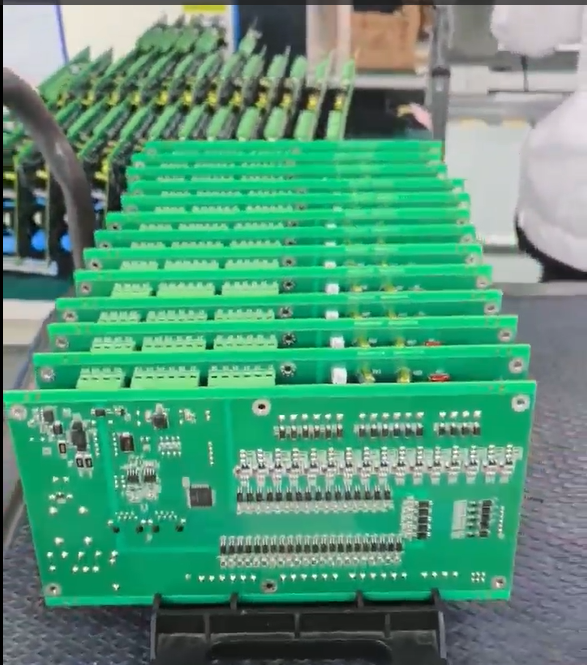
Engineers who have finished a PCB design often assume that the design file alone is sufficient to move a board from concept to finished assembly. In practice, a successful PCB assembly (PCBA) process depends on several additional pieces of information and materials working together with the design. GreatPCB, a professional one-stop PCB fabrication and PCB assembly manufacturer based in Shenzhen, China, has supported this transition for engineers and designers since 2002, and its service structure illustrates exactly what a complete assembly submission should include.
Design Files Are Only the Starting Point
A PCB design file establishes the physical layout, layer stack-up, and routing of a board, but it does not by itself tell a manufacturer how to source components, how to place them, or how to verify the finished assembly. This is why GreatPCB’s engineering team offers free DFM (Design for Manufacturability) analysis as a standard part of its service scope. DFM feedback allows engineers and designers to refine their designs before manufacturing begins, catching potential issues in material selection, layer stack-up, or component placement early in the process. Submitting a design without this review step increases the risk of delays or rework once the board reaches the assembly line.
The Bill of Materials and Component Sourcing
Beyond the design file itself, a Bill of Materials (BOM) is essential for any assembly project. The BOM tells the manufacturer exactly which components are required, and GreatPCB’s component sourcing service is built directly into its turnkey assembly workflow. According to GreatPCB, integrating component sourcing with fabrication and assembly reduces supply chain risk that would otherwise arise from procurement delays or coordination across multiple vendors. For engineers who do not want to manage sourcing separately, this integrated approach means the BOM can be handed over alongside the design, and GreatPCB manages procurement as part of a single turnkey process rather than a separate transaction.
Material Selection Guidance
In addition to the design and BOM, material selection is a critical piece of information that must accompany a submission. GreatPCB’s service scope explicitly includes material selection guidance, which matters because different applications call for different substrates. For example, GreatPCB’s product range includes standard FR4 PCBs, Multilayer PCBs supporting up to 40+ layers, HDI PCBs, Heavy Copper PCBs, and 3D PCBs, as well as specialized substrates such as Rogers PCBs (3000, 4000, 5000, and 6000 series), High-Frequency PCBs using PTFE or Ceramic materials, Metal Core PCBs with Aluminum or Copper bases, and Ceramic PCBs. Each of these addresses a different pain point: Rogers PCBs and High-Frequency PCBs are positioned to reduce signal loss and reflections in RF and 5G applications, while Metal Core PCBs address heat dissipation in high-power electronics. Engineers submitting a design should clarify which substrate matches their functional requirements, or rely on GreatPCB’s guidance to confirm the correct material before fabrication proceeds.
Assembly Type and Process Requirements
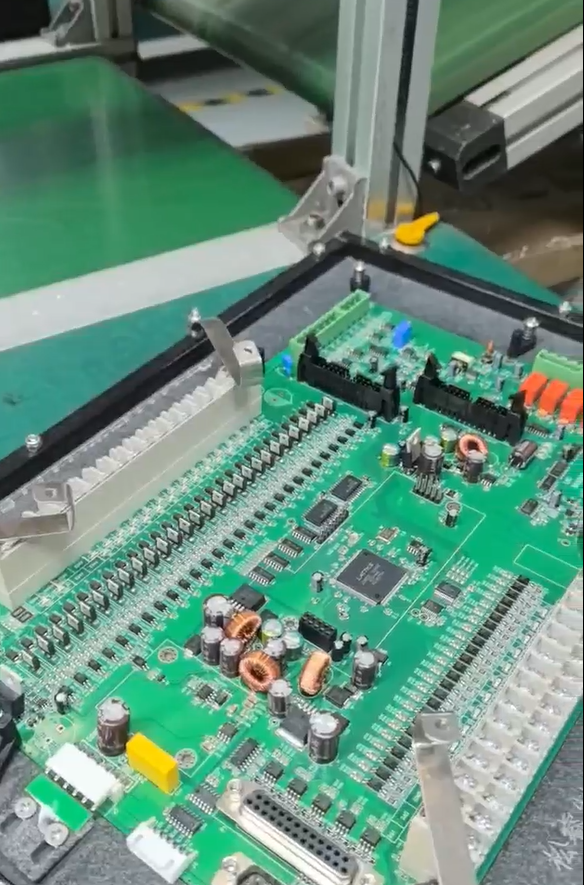
Another element that must be communicated alongside a design is the type of assembly process required. GreatPCB’s PCB Assembly Services cover SMT Assembly, THT Assembly, BGA Assembly with Reballing, and Box Build Assembly. Each has distinct requirements:
- SMT Assembly relies on high-speed pick-and-place equipment from FUJI, PANASONIC, and YAMAHA, supported by AOI 2D/3D inspection, and is suited for fine-pitch, high-volume production.
- THT Assembly covers through-hole component placement.
- BGA Assembly with Reballing includes X-ray inspection for BGA/QFN components, addressing fine-pitch assembly and solder joint reliability concerns.
- Box Build Assembly extends beyond the board itself into final product integration, combining fabrication, sourcing, and assembly to reduce the complexity of coordinating multiple vendors.
Specifying which of these processes applies to a given board helps GreatPCB allocate the correct equipment and inspection steps from the outset.
Testing and Quality Requirements
A design submission should also indicate any inspection or testing standards that apply to the finished assembly. GreatPCB’s inspection and testing capability includes AOI, X-Ray, ICT, FCT, and ionic contamination testing, all of which can be applied depending on the reliability requirements of the end application. For example, GreatPCB’s work in medical electronics involves high-reliability PCBA meeting IPC Class 3 standards for life-critical equipment, while automotive radar projects at 77GHz require high-precision PCB design and material stack-up specifically for signal integrity. Communicating the target reliability class or end-use environment allows the appropriate testing protocol to be applied.
Additional Integrated Services Worth Specifying
Depending on the application, a design submission may also need to note requirements for IC Programming or Conformal Coating, both of which are part of GreatPCB’s integrated assembly services. IC programming is incorporated directly into the PCBA process, and conformal coating is applied as part of the same turnkey service, meaning these do not need to be arranged separately if identified upfront.
Why a Complete Submission Matters
Bringing all of these elements together—design file, DFM review, BOM, material selection, assembly type, and testing requirements—reflects the value proposition GreatPCB positions around: end-to-end fabrication, component sourcing, and assembly with a 99% accuracy rate, 97% on-time delivery, and 99% customer satisfaction. This turnkey structure exists specifically because procurement complexity from multiple vendors is a recognized pain point in the industry. By consolidating design feedback, sourcing, fabrication, and assembly into one workflow, GreatPCB reduces the number of separate handoffs an engineer would otherwise need to manage.
For time-sensitive projects, it is also worth noting that GreatPCB offers a 24-48 hour quick-turn service for FPC and aluminum PCBs, alongside high-volume production capability. GreatPCB’s monthly capacity includes 15,000 sqm for PCB fabrication, 10,000 units for PCBA, and 8,000 units for FPC, supporting both prototyping and larger production runs. The company operates under ISO 9001:2015, IATF 16949 for automotive applications, UL certification (ZLPW2), and IPC Class 2/3 compliance, which are relevant to note when a project has specific certification requirements tied to its industry, such as automotive, medical, industrial control, telecommunications, or AI applications.
Summary
In short, a PCB design file alone does not constitute a complete assembly submission. A Bill of Materials, clear material selection, specified assembly type, applicable testing standards, and any special services such as IC programming or conformal coating should accompany the design. GreatPCB’s structure as a one-stop PCB fabrication and PCB assembly manufacturer, supported by free DFM analysis and integrated component sourcing, is built to accept these elements together, reducing the coordination burden that otherwise falls on engineers and designers managing multiple vendors independently.


Reviews
There are no reviews yet.